
Speeding has always mattered in Los Angeles car accident claims, but in 2026 it matters in a more public way. The city is moving forward with a speed camera pilot, and that has a lot of drivers asking the wrong question. They focus on tickets. Injury victims should be focusing on something else: whether the new enforcement environment changes how speeding crashes are investigated, argued, and defended after someone gets hurt.
That is why Los Angeles speeding accident claims 2026 is a strong topic right now. The legal issue is not just that speeding causes bad crashes. It is that more attention is being placed on where speeding happens, how often it happens, and what evidence may exist after a collision. But this is also where people get confused. A speed camera pilot does not automatically make every speeding crash easier to prove. It does not instantly hand injured people a perfect liability case. And it does not replace the basic evidence that still drives most personal injury claims.
If you were injured in a crash where speed may have played a role, the key is understanding what the new system can affect and what it cannot. The rollout may change traffic enforcement, driver behavior, and public awareness. It may also create new questions about records, citations, and what counts as useful proof. But the core of a Los Angeles accident case still comes down to negligence, causation, damages, and evidence.
Why This Topic Matters More in Los Angeles Right Now
Los Angeles is not treating speeding like a minor quality-of-life issue anymore. The city is treating it like a serious street-safety problem. That matters because injury claims often follow public safety patterns. When a city identifies speeding as a major driver of severe and fatal crashes, that tends to shape enforcement priorities, public messaging, and the way crash facts are interpreted after someone gets hurt.
It also matters because Los Angeles traffic creates exactly the kind of conditions where speed becomes especially dangerous. Congested arterials, multi-lane boulevards, long signal gaps, high pedestrian activity, late braking, and aggressive lane changes can turn a few extra miles per hour into a much worse outcome. A crash that might have caused minor property damage at lower speed can become a major injury case when force, stopping distance, and reaction time all shift in the wrong direction.
The new speed camera pilot is part of a bigger safety shift
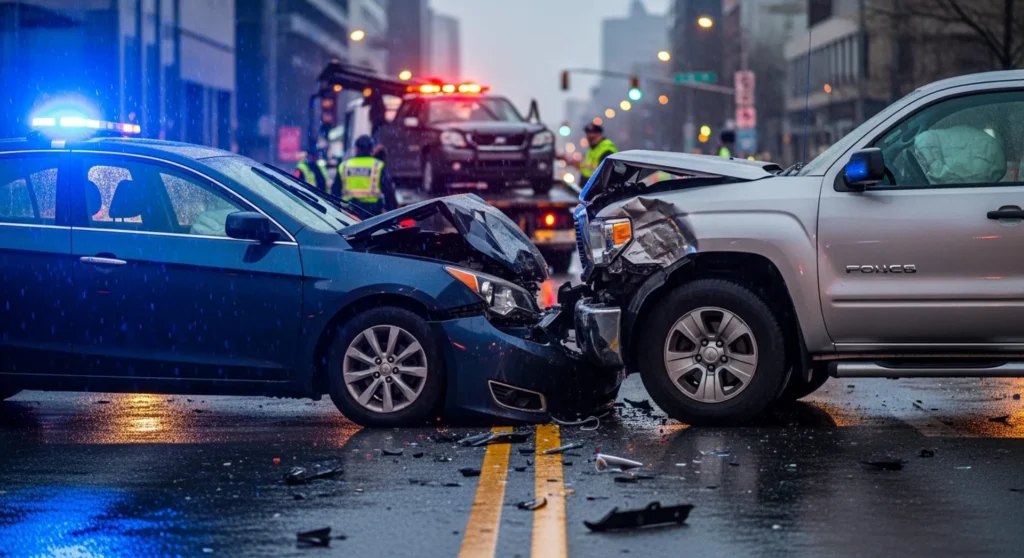
Los Angeles’s speed safety system pilot is not just a random tech experiment. It is part of a larger attempt to reduce speed-related deaths and serious injuries. That matters in litigation because it reflects a growing recognition that speeding is not an abstract risk. It is a documented crash factor with real local consequences.
For readers already exploring your site, this article pairs naturally with Why Speed and Aggressive Driving Are Major Causes of Accidents in LA. That post explains the danger pattern. This one explains what the new enforcement landscape may and may not do for injury victims.
Why injury victims should not overestimate what cameras prove
This is the first big misconception to clear up. A speed camera system is not the same thing as a full crash reconstruction tool available to every plaintiff on demand. In many cases, the injured person will still need the same evidence they would have needed before the pilot existed: police reports, witness statements, scene photos, vehicle damage, black-box data where available, medical records, and private video such as dashcam or surveillance footage.
That is why your existing article on AI Dashcams and Digital Evidence is such a strong internal companion here. The more people assume “the city camera must have everything,” the more likely they are to miss the evidence they actually control themselves.
What the Speed Camera Program Changes
The pilot changes the environment around speeding, but not in a magical all-purpose way. It may increase deterrence in selected locations. It may create documented civil violations. It may bring more public attention to repeat speeding corridors. And it may support broader safety analysis over time. Those are meaningful changes, especially on streets where unsafe speed has become normalized.
It puts more formal attention on high-risk speeding locations
One important change is concentration. The program focuses on locations chosen because of crash, speed, and community-vulnerability data. That means the city is making a more formal record of where speeding is treated as a significant hazard. In a practical sense, that can shape how certain crashes are viewed. When a collision happens in a corridor already identified for severe speeding concerns, the argument that speed was a foreseeable danger may feel more concrete.
That does not automatically prove negligence in any one case. But it can reinforce the broader context in which the crash occurred.
It can create a citation record in some cases
If a speeding vehicle is captured under the program, that may result in a civil notice of violation. That may matter factually, but injured people should be careful here. A ticket is not the same thing as a complete liability finding. It does not automatically establish every element of a personal injury claim. It also does not replace proof that the speeding actually caused or contributed to the crash.
That point matters because insurers often fight causation even when a driver was plainly doing something wrong. A defense may argue that the crash would have happened anyway, that another driver caused the collision, or that the injury value is being overstated. A speed-related violation can help, but it is not the entire case.
It may push more attention toward speed as a crash factor
Another practical change is narrative. Speeding can be underplayed in post-crash disputes when no one has hard proof of exact speed. More public focus on dangerous speeding may make it harder for defendants to dismiss speed as irrelevant when the scene facts point the other way.
This can be especially important in rear-end crashes, intersection impacts, and rideshare collisions where a driver may claim they simply “could not stop in time.” That explanation often sounds less innocent when excess speed is part of the story. For that reason, this article also works well with Rear-End Car Accidents in Los Angeles and Uber and Lyft Accidents in Los Angeles.
What the Program Does Not Change
This is where the legal analysis gets more useful. The new pilot does not eliminate the standard structure of a California injury claim. Plaintiffs still need to prove fault, causation, and damages. They still need organized medical records. They still need to move fast to preserve evidence. And they still should not assume the government has already collected everything they need.
It does not make private crash proof automatic
Many injury victims imagine that once cameras are active, every speeding crash will come with ready-made footage. That is not how these systems work in practice. The existence of an enforcement system does not mean broad public access to all related records, and it does not guarantee the right camera, the right angle, or the right timing for your specific collision.
So if you are injured, do not wait around expecting city records to carry the entire case. Preserve your own evidence immediately. Photograph the roadway, damage, skid marks, debris, signals, injuries, and nearby businesses that may have cameras. Ask about witness names. Save your own dashcam data before it is overwritten.
It does not remove comparative fault fights
Even when speed clearly played a role, insurance companies may still argue comparative fault. They may claim another driver made the unsafe turn, abrupt stop, or improper lane change that triggered the crash. They may also argue that the injured person’s conduct added to the harm.
That means the same defense tactics still exist. The speeding issue may strengthen part of the case, but it does not erase every other dispute. Strong injury claims are still built on a full fact pattern, not one dramatic detail.
It does not replace medical proof
One of the most common mistakes in any accident case is putting all the attention on the crash mechanics and not enough on the injury record. Even a strong liability case can lose value when treatment is delayed, records are incomplete, or the file does not clearly connect the injuries to the collision.
The bottom line is simple. The more a case involves serious speeding, the more carefully the plaintiff should preserve both liability evidence and medical evidence. One proves how the crash happened. The other proves what it cost.
What Injured People Should Do After a Suspected Speeding Crash
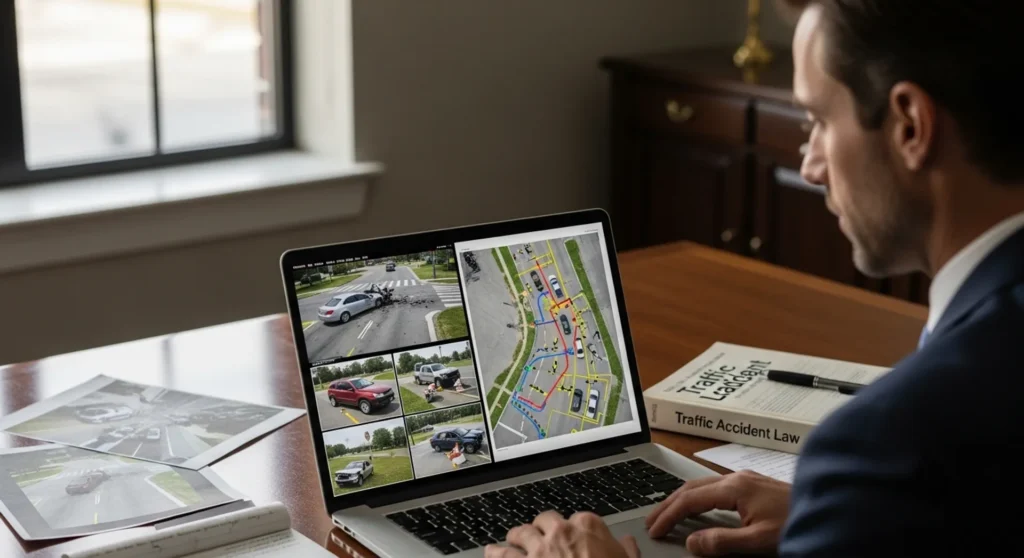
Get medical care first. Then preserve every piece of evidence you can control. Take scene photos. Save video. identify witnesses. Request the traffic report. Note whether the crash happened in an area known for speeding or near one of the city’s selected safety-system corridors. Do not guess about exact speed if you do not know it, but document the facts that may support it, such as long debris spread, severe crush damage, short stopping distance, or witness descriptions.
Also be cautious with insurer statements. The defense may try to reduce the role of speed or reframe the collision as an unavoidable event. That is especially common in Los Angeles crashes involving dense traffic, sudden braking, or multi-car chain reactions.
Final Thoughts
Los Angeles speeding accident claims 2026 are worth special attention because the city’s new speed camera pilot changes the enforcement backdrop around unsafe speed. It may create more deterrence, more speed-related documentation, and more public focus on dangerous driving. But it does not replace the core work of building an injury claim.
If a speeding driver injured you, do not assume the city has already done your evidence job for you. Move quickly. Preserve the scene. Save digital records. Get treatment. Use the new enforcement context as part of the story, not as a substitute for proof. That is how a speeding case becomes stronger instead of just louder.
External resources: See LADOT’s Speed Safety System Program and California’s AB 645 text.