
A Los Angeles school zone accident can happen during a normal morning drop-off or afternoon pickup. A driver may rush through traffic, glance at a phone, block a crosswalk, or make a quick turn near a school. In seconds, a child, parent, teacher, bicyclist, or crossing guard can suffer serious injuries.
This topic matters in 2026 because California has updated school-zone speed rules. Assembly Bill 382 allows local authorities to lower certain school-zone limits from 25 mph to 20 mph. CHP also highlights the rule as part of California’s 2026 public safety law updates. That means school-zone speed, signage, and driver conduct may receive more attention after a crash.
A Los Angeles school zone accident can involve more than one legal issue. The claim may include speeding, distracted driving, unsafe turns, blocked visibility, rideshare traffic, poor drop-off design, or uninsured drivers. Families should not assume the insurance company will explain every option. Strong evidence can decide how fault and compensation are handled.
Why School Zone Accident Claims Need a Careful Review
School zones are different from ordinary streets. Drivers should expect children near schools. A child may cross quickly, move between parked cars, ride a bike, or misjudge how fast a car is coming. That risk makes careful driving even more important.
Los Angeles traffic adds another layer. Many schools sit near busy corridors, apartment areas, bus stops, and commuter routes. Morning and afternoon traffic can feel rushed. That pressure can lead to sudden stops, unsafe U-turns, and impatient driving.
Lower Speed Limits Can Affect Fault
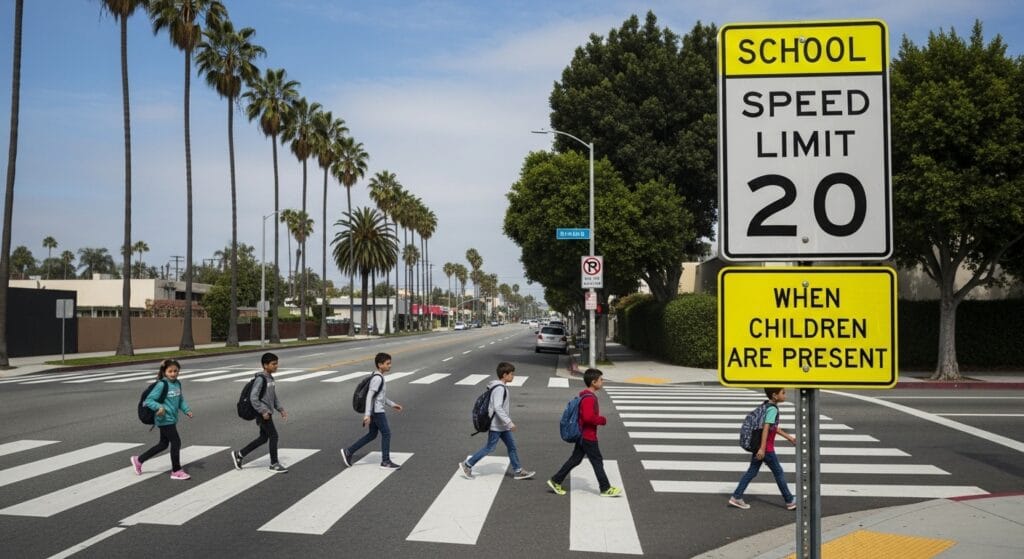
Speed plays a major role in a Los Angeles school zone accident. A small speed difference can affect stopping distance and injury severity. A driver traveling too fast may have less time to see a child near a crosswalk.
Investigators may review the posted speed limit, warning signs, traffic flow, witness statements, and driver behavior. They may also look at whether children were present and whether the driver had a clear view. If the driver ignored school-zone conditions, that fact can support a negligence claim.
A posted speed limit does not tell the whole story. A driver can still travel too fast for the situation. Crowded sidewalks, parked SUVs, buses, and crossing guards may require a slower speed than usual.
School Drop-Off Traffic Creates Predictable Hazards
School drop-off traffic can become chaotic. Some drivers stop suddenly. Others double park, block crosswalks, unload children into traffic, or make unsafe U-turns. Delivery vehicles, rideshare cars, school buses, and commuters may all move through the same area.
These actions can create dangerous conditions. A double-parked vehicle can hide a child from view. A blocked crosswalk can force pedestrians into traffic. A rushed driver may fail to yield. A distracted driver may never see the child at all.
After a crash, these details matter. Families should document the exact drop-off pattern, vehicle positions, crosswalk markings, curb paint, school signs, and nearby cameras. The scene may explain why the crash happened.
Children Need Extra Driver Attention
Insurance companies may try to blame a child after a school-zone crash. They may say the child ran, crossed too quickly, or failed to look both ways. Families should not accept that argument without reviewing the full facts.
Children do not judge speed and distance like adults. A young child may not understand how fast a vehicle is approaching. A careful driver should expect that risk near a school. Drivers should slow down, watch the curb, check crosswalks, and prepare to stop.
The child’s age can matter in the fault analysis. The crash location can matter too. A collision near a school entrance, marked crosswalk, bus stop, or crossing guard may show that the driver should have expected children nearby.
Visibility Problems Can Change the Case
Visibility often becomes a key issue in a Los Angeles school zone accident. A parked SUV, bus, fence, tree, delivery truck, or line of cars can block a child from view. A driver may claim the child appeared suddenly. That statement does not end the case.
The better question is whether the driver should have anticipated the danger. A careful driver slows down when parked vehicles block the view near a school. A careful driver also watches for children walking between cars.
Photos can help prove visibility problems. Families should photograph crosswalks, signs, curbs, parked vehicles, school entrances, bus loading areas, and traffic signals. Photos taken at the same time of day can show lighting, shadows, and traffic conditions more clearly.
How Families Can Protect a Los Angeles School Zone Accident Claim
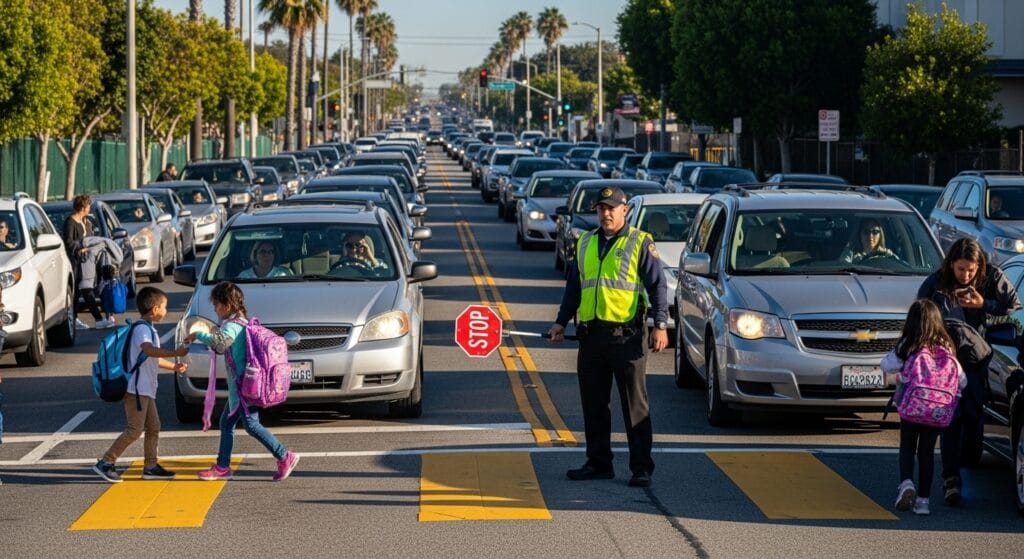
A strong claim needs proof. Families often focus on medical care first, and that is the right priority. Still, evidence can disappear quickly. Cars move, witnesses leave, and video footage may get deleted.
Fast action can preserve details that decide fault, damages, and insurance coverage. Families should gather records early and avoid guessing about facts they do not know yet.
Save Evidence Before It Disappears
Important evidence may include the police report, witness names, crossing guard statements, school staff observations, photos, video footage, traffic citations, and medical records. Nearby cameras may also help. Schools, homes, buses, businesses, and dashcams may capture the crash.
Parents should write a simple timeline. Include the time, location, direction of travel, and what happened before impact. Write down what the driver said. Also note whether an ambulance arrived and what symptoms appeared later.
Do not ignore delayed symptoms. A child may later report headaches, dizziness, back pain, knee pain, fear, sleep problems, or confusion. These symptoms may point to a more serious injury.
Medical Records Connect the Injuries to the Crash
Children may not explain pain clearly. Some children say they feel fine because they feel scared or overwhelmed. A prompt medical visit protects the child’s health. It also creates a record that connects the injury to the crash.
Medical damages may include emergency care, imaging, follow-up visits, therapy, medication, counseling, and future treatment. Parents may also miss work while caring for the child. Keep receipts, mileage logs, school absence notes, and work records.
This topic connects well with your post on Los Angeles speeding accident claims in 2026. School-zone claims often involve speed, reaction time, and whether the driver had enough space to stop.
Be Careful With Insurance Calls
Insurance adjusters may contact parents soon after the crash. They may ask for a recorded statement. They may also ask questions that shift blame to the child. Parents should avoid guessing about speed, distance, visibility, or fault.
Early statements can hurt a valid claim. A parent may say the child “came out of nowhere” before reviewing the full facts. The insurer may use that phrase later. It is safer to gather evidence first.
A Los Angeles school zone accident may involve more than one responsible party. The driver may hold liability. A vehicle owner, employer, rideshare company, delivery company, school transportation provider, or public entity may also matter in some cases.
Some crashes may also involve distracted driving. If the driver used a phone, navigation app, or in-car screen, digital evidence can matter. Readers can review your article on Los Angeles distracted driving accident claims for more detail.
Video evidence can also help. Dashcams, school cameras, business cameras, and nearby home cameras may show speed, visibility, and driver behavior. Your guide on AI dashcams and digital evidence fits well as a supporting internal link.
If the driver flees or lacks enough insurance, coverage can become another issue. Families may need to review uninsured motorist protection. Your article on uninsured motorist coverage in California can help readers understand that part of the claim.
The bottom line is simple. School zones require extra care. Drivers must slow down, watch for children, avoid unsafe shortcuts, and respect posted signs. When a driver speeds, looks at a phone, blocks a crosswalk, or ignores school-zone conditions, the results can be serious.
A Los Angeles school zone accident claim should focus on speed, visibility, signage, driver behavior, child safety, medical records, and available insurance. With the right evidence, families can push back when insurers try to blame a child unfairly.
For additional authority, readers can review the California Highway Patrol’s 2026 public safety law update at CHP.ca.gov and the California AB 382 bill text at LegiScan.com.