
A Los Angeles ghost plate accident claim can become difficult fast. A “ghost plate” usually means a vehicle has a license plate that looks hidden, altered, tinted, covered, fake, flipped, unreadable, or designed to avoid camera detection. When that driver causes a crash and leaves, the injured person may lose the detail that often identifies the vehicle: the plate number.
This issue matters in 2026 because California has placed more attention on license plate obstruction and electronic plate-reading interference. For accident victims, this is not only a traffic-ticket issue. A readable plate can help police, witnesses, traffic cameras, toll systems, dashcams, and insurers connect a crash to the correct vehicle.
Los Angeles already has busy freeways, dense intersections, rideshare pickup zones, delivery corridors, nightlife districts, school zones, and high-injury streets. These conditions can make crash investigations hard even when everyone stays at the scene. When a driver uses an unreadable plate and flees, the claim can become a race to collect video, witness details, physical evidence, and insurance records.
This article is for educational purposes only and is not legal advice. Every accident claim depends on the facts, injuries, insurance coverage, available evidence, and deadlines.
Why Ghost Plates Matter After a Los Angeles Crash
Most car accident claims start with basic information. You need the other driver’s name, insurance details, vehicle description, license plate, registration, and police report. A ghost plate creates a gap in that process. The injured person may have vehicle damage and medical bills, but no easy way to identify the driver or policy.
The problem gets worse when the driver leaves the scene. A witness may remember only a dark plate cover, a temporary tag, a partial plate, or a vehicle with no visible plate. A nearby camera may capture the crash but fail to read the plate. The victim may know what happened but still need proof that connects the crash to a specific vehicle.
California’s DMV 2026 new laws update says AB 1085 makes it a $1,000 infraction to manufacture in California a product or device that obscures, or intends to obscure or interfere with, visual or electronic license plate reading. Readers can review the official update here: California DMV 2026 new laws update.
Obscured plates can turn identification into the main issue
Fault is not the only question after a crash. The injured person must also identify the responsible party. If a driver runs a light, rear-ends a vehicle, clips a pedestrian, hits a cyclist, or causes a freeway crash, the claim still needs evidence that points to that driver.
An unreadable plate gives insurers room to challenge the story. They may question whether the other vehicle caused the damage, whether contact happened, whether the injured person remembered the vehicle correctly, or whether another cause explains the injuries.
This is why ghost plate claims overlap with modern evidence issues. Your article on Los Angeles Distracted Driving Accident Claims in 2026 explains how phone, map, and screen evidence can prove fault. Ghost plate cases need the same mindset: preserve objective evidence before it disappears.
Search for video beyond the crash scene
A camera at the exact crash location may not show the plate clearly. That does not end the search. Look for cameras before and after the impact point. A gas station, apartment complex, warehouse, restaurant, hotel, school, parking garage, toll road area, or doorbell camera may capture the vehicle from a better angle.
Useful footage may show more than a plate. It may show the vehicle’s make, model, color, body style, wheel design, roof rack, broken headlight, bumper damage, decals, tinted windows, or direction of travel. Those details can help identify the vehicle or support the timeline.
Preserve partial plate details and physical evidence
A partial plate can still help. Two or three characters, the state, plate color, frame style, temporary tag shape, or visible cover may narrow the search. Write down every detail as soon as possible. Stress can blur memory quickly after a crash.
Physical evidence also matters. Take photos of broken plastic, paint transfer, glass, light fragments, tire marks, scrape marks, and impact damage. Do this before anyone repairs, cleans, sells, moves, or sends the damaged vehicle to salvage.
Hit-and-run insurance issues after an unreadable plate
If the driver flees and the plate cannot identify the vehicle, insurance can become complicated. The victim may not have an at-fault driver’s policy to pursue. In that situation, uninsured motorist coverage may become important, depending on the facts and policy language.
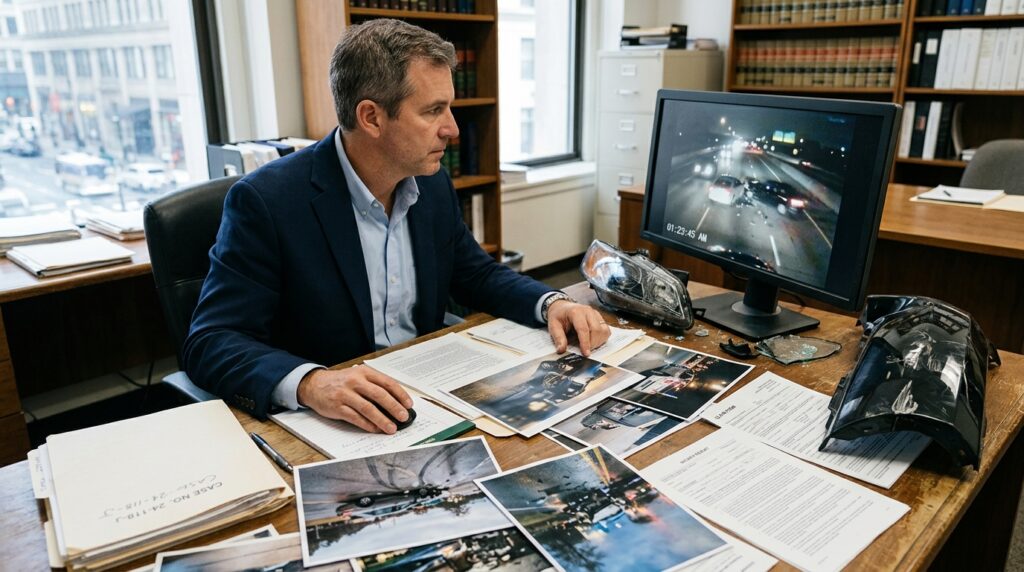
Some victims assume they have no case if the driver disappears. That is not always true. A claim may still move forward with police reports, witness statements, medical records, vehicle damage, camera footage, and UM coverage. The problem is timing. Video can disappear. Witnesses can forget details. Medical gaps can weaken the injury portion of the claim.
Your article on Los Angeles Hit-and-Run Accident Claims in 2026 is a strong internal link here. Ghost plate claims often become hit-and-run claims because the victim cannot identify the fleeing vehicle quickly.
UM coverage may become important
Uninsured motorist coverage may help when the at-fault driver has no insurance or cannot be identified after a hit-and-run. Underinsured motorist coverage may matter if police later find the driver but the driver lacks enough coverage for the injuries.
Do not assume coverage applies automatically. Policy language, reporting rules, medical proof, and deadlines matter. Report the crash, get the police report number, notify your insurer carefully, and keep copies of all letters and claim documents.
How Victims Can Protect a Ghost Plate Injury Claim
The first step after any crash is safety. Call 911 if anyone is hurt. Move to a safe place if possible. Get medical care, even if the pain feels manageable at first. Some injuries worsen after the adrenaline fades.
Next, document the scene. Take photos of vehicle damage, road markings, signals, lane position, debris, skid marks, lighting, nearby cameras, and the location where the other vehicle fled. If witnesses stopped, get their names and contact information. Ask what they saw, but do not pressure them to guess.
Report the missing or obscured plate clearly. Tell police if the plate looked covered, tinted, altered, fake, temporary, flipped, missing, or unreadable. Include partial plate characters if you remember them. Give the vehicle color, size, direction, and any unusual features.
Evidence checklist for camera, medical, and insurance disputes
A strong Los Angeles ghost plate claim needs more than one type of proof. Liability evidence shows how the crash happened and why another driver caused it. Identification evidence helps connect the crash to a vehicle or possible driver. Medical evidence shows what injuries the crash caused and how those injuries affected daily life.
Start with photos and video. Save dashcam clips, phone videos, traffic camera locations, doorbell camera locations, and business names near the crash. If the crash happened near a rideshare zone, delivery route, school, shopping center, beach area, or freeway ramp, nearby cameras may help.
This topic also connects with Los Angeles Speeding Accident Claims in 2026. Both topics show the same trend: modern accident claims often depend on objective evidence such as cameras, location data, and vehicle movement.
Do not wait on footage, treatment, or deadlines
Delay can hurt the claim. Many video systems overwrite footage within days. Some overwrite sooner. Witnesses may stop answering calls. Damaged vehicles may get repaired. Medical symptoms may become harder to connect to the crash if treatment starts late.
Keep emergency records, imaging reports, therapy notes, prescriptions, work restrictions, repair estimates, towing bills, rental receipts, and insurance letters. If pain, anxiety, sleep problems, driving fear, or missed work develops, document it. Insurance companies often attack both fault and damages, so organized records matter.
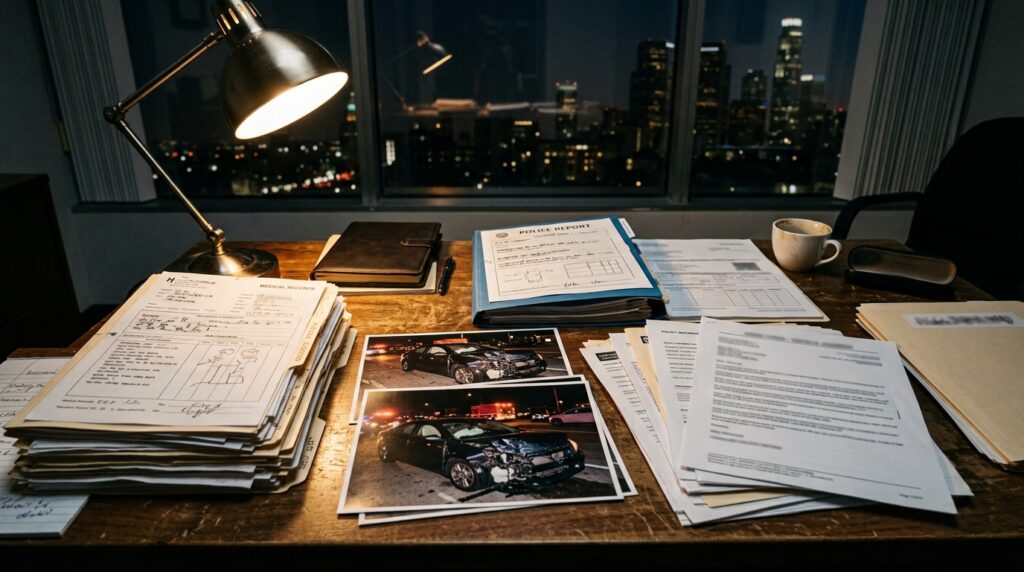
A ghost plate makes an accident claim harder, but it does not automatically end the case. The driver may have hidden the plate, but cameras, witnesses, vehicle damage, debris, medical records, and insurance coverage can still help tell the story.
If you were injured by a vehicle with an obscured, fake, missing, or unreadable plate, act quickly. Get medical care. Report the crash. Document the scene. Search for video. Save every detail you remember. Then review the insurance issues before giving broad statements or accepting a quick settlement.