
Commercial driver accident claims in Los Angeles can involve more than a careless driver and a damaged vehicle. When a crash involves a truck, delivery van, bus, shuttle, freight vehicle, or other commercial vehicle, the case may include federal safety rules, employer records, driver qualification files, vehicle data, and layered insurance coverage.
This topic matters in 2026 because commercial driver standards are getting fresh attention. Federal agencies and lawmakers continue to focus on who should operate commercial motor vehicles, how states verify CDL eligibility, and how unsafe drivers should be kept off the road. For injured people, those issues can affect the evidence, the liable parties, and the value of the claim.
Los Angeles has heavy freeway traffic, port freight routes, warehouse corridors, delivery zones, rideshare traffic, and crowded city streets. Commercial drivers move through all of it. A single unsafe turn, lane change, brake failure, or distracted moment can cause serious injuries.
This guide explains how commercial driver accident claims work, what evidence matters, who may be liable, and what crash victims should do after a collision with a commercial vehicle in Los Angeles.
Why Commercial Driver Accident Claims Need a Deeper Investigation
A normal car crash claim often starts with two drivers and two insurance policies. A commercial vehicle crash can involve many more people and records. The driver may work for a trucking company, delivery company, contractor, broker, rideshare fleet, construction company, or public transportation provider.
The company may own the vehicle. Another business may lease it. A third party may maintain it. A broker may arrange the load. A dispatcher may push the route. Each detail can matter after a serious crash.
That is why victims should not treat commercial driver accident claims like simple fender benders. Commercial cases often require fast preservation of records. If the injured person waits too long, key documents, video, and vehicle data may disappear.
CDL Rules Can Affect the Fault Analysis
Commercial drivers must meet higher standards than ordinary drivers. Many need a commercial driver’s license, medical qualification, training, endorsements, and safe driving records. A driver may also need to follow hours-of-service rules, inspection rules, and company safety policies.
The California DMV explains that a driver must hold a commercial learner’s permit before applying for a CDL. The DMV also notes that California uses the Drug and Alcohol Clearinghouse to check whether a driver has a prohibited status before issuing, replacing, renewing, upgrading, or transferring a CDL.
For official guidance, readers can review the California DMV commercial driver license page. Victims can also review FMCSA’s 2026 non-domiciled CDL final rule FAQs for current federal CDL guidance.
Driver Qualification Files Can Reveal Red Flags
Driver qualification records can become powerful evidence. These files may show whether the company checked the driver’s license status, medical qualification, training history, safety record, and background. They may also show whether the company ignored warning signs.
A crash victim should ask more than, “Who hit me?” The better question is, “Why was this driver behind the wheel?” If the company hired an unsafe driver, skipped checks, ignored complaints, or kept a risky driver on the road, the claim may reach beyond driver negligence.
Drug, Alcohol, and Medical Issues May Matter
Commercial driving requires attention, judgment, and physical ability. A driver who operates under the influence, drives while medically unqualified, or ignores required testing can create major danger. Employers must also follow rules that help keep unsafe drivers out of commercial vehicles.
These records may not appear in a basic police report. An attorney may need to request them from the employer, insurer, or regulatory source. If the company refuses to preserve records, that refusal may become part of the dispute.
Who May Be Liable After a Commercial Vehicle Crash?
Liability depends on the facts. The commercial driver may be liable if they sped, followed too closely, changed lanes unsafely, ran a red light, drove distracted, or failed to yield. However, the employer may also share responsibility if the driver acted within the scope of the job.
A trucking company may be liable for unsafe hiring, poor training, weak supervision, pressure from dispatch, or failure to maintain the vehicle. A maintenance company may be liable if bad repairs caused brake failure, tire failure, steering problems, or lighting issues.
Other companies may also enter the case. A loading company may create danger by overloading cargo or failing to secure it. A broker may matter if it arranged an unsafe carrier. A vehicle manufacturer may matter if a defect contributed to the crash.
Insurance companies often try to narrow the claim to one driver. Victims should not accept that too quickly. Commercial crashes often involve corporate decisions that happened before the vehicle entered traffic.
What Evidence Can Strengthen a Los Angeles Commercial Vehicle Claim?
Strong evidence can make or break commercial driver accident claims. A commercial carrier may have lawyers, adjusters, and investigators working quickly after the crash. The injured person should act with the same urgency.
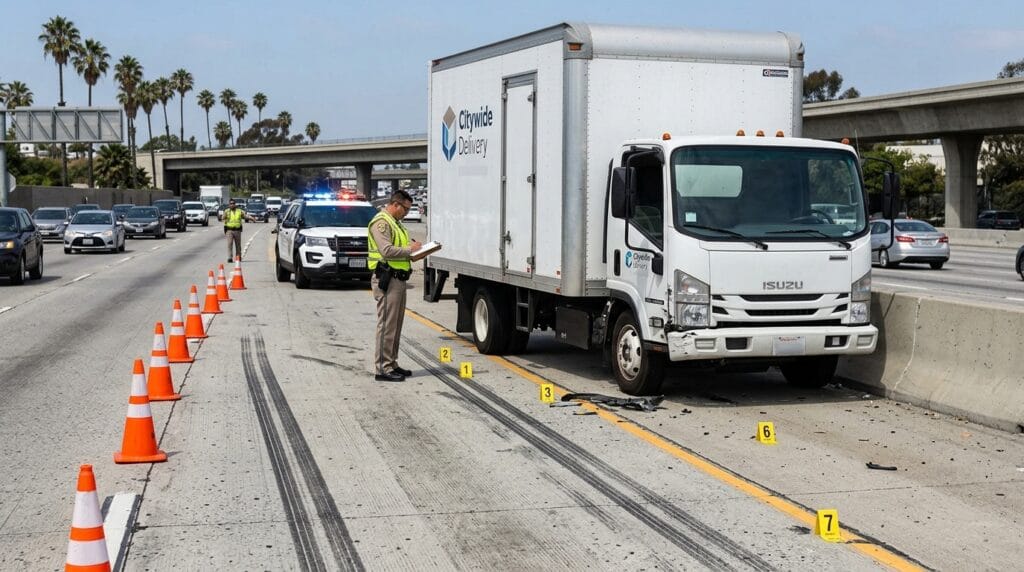
Start with medical care and a police report. Then document the scene. Take photos of the vehicles, company markings, license plates, DOT numbers, trailer numbers, cargo, skid marks, debris, traffic signals, road signs, and visible injuries.
Look for cameras nearby. Los Angeles crashes may happen near businesses, warehouses, gas stations, apartments, traffic corridors, and freeway ramps. Surveillance footage may show speed, braking, lane position, turning movement, or driver behavior before impact.
Digital Records, Dashcams, and Black Box Data
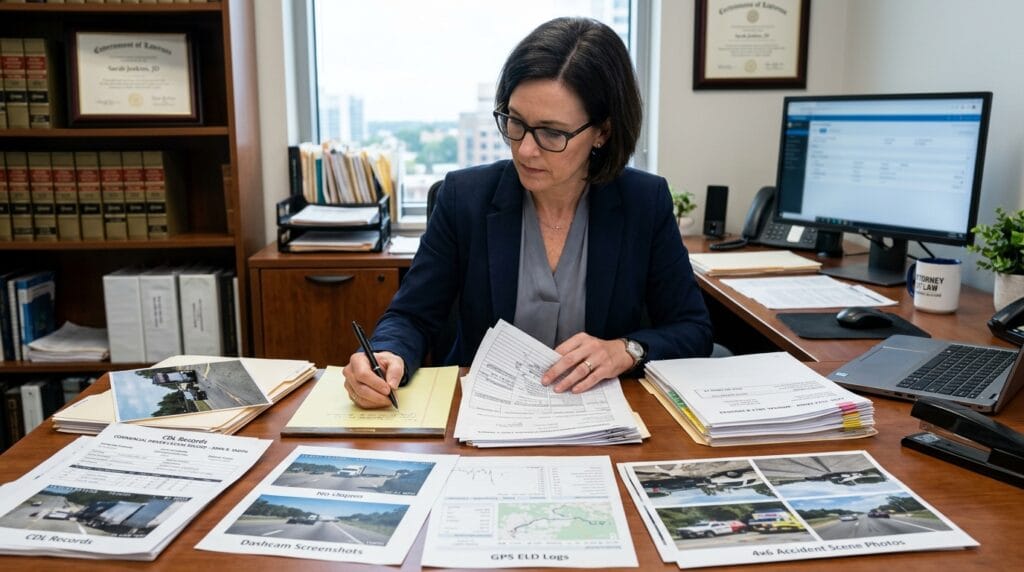
Modern commercial vehicles often create useful digital records. These may include dashcam video, GPS logs, electronic logging device data, event data recorder information, braking records, speed records, and maintenance alerts.
This evidence can show whether the driver braked late, drove too fast, exceeded hours limits, took a risky route, or ignored safety warnings. It can also challenge a company’s version of the crash.
Your site’s article on Los Angeles distracted driving accident claims supports this point well. Commercial crashes may involve phone use, dispatch apps, map screens, delivery alerts, and company devices.
Vehicle Data Can Show More Than the Driver Admits
A driver may say traffic stopped suddenly. Vehicle data may show speeding, late braking, or no braking at all. A driver may deny distraction. Video may show the driver looking down before impact.
This is why early preservation matters. Dashcams overwrite footage. Companies repair vehicles. Electronic logs update. If a victim waits too long, the strongest evidence may vanish.
Your guide on Los Angeles speeding accident claims also fits here. Speed can change stopping distance, crash force, and injury severity in commercial vehicle cases.
What Victims Should Do After a Commercial Driver Crash
Call 911 and request medical help. Do this even if pain seems mild. Truck and commercial vehicle crashes can cause delayed symptoms, including neck pain, back injuries, concussions, internal injuries, and nerve pain.
Get the company name, driver name, license plate, insurance information, DOT number, and vehicle markings. If the vehicle leaves, write down color, logo, trailer number, direction of travel, and any visible damage.
Do not give detailed recorded statements too early. Commercial insurers may ask questions that shift blame or minimize injuries. Stick to facts. Do not guess about speed, distance, or fault.
Save every record. Keep medical bills, discharge papers, prescriptions, repair estimates, photos, videos, missed-work notes, and insurance letters. If the crash caused a rear-end impact, your site’s guide on rear-end car accidents in Los Angeles can help readers understand fault issues.
Deadlines and Insurance Limits Can Change the Case
Commercial claims can involve large policies, but that does not mean insurers pay fairly. They may dispute fault, argue that injuries are minor, blame another driver, or claim the employee was outside the job scope.
Deadlines also matter. A standard personal injury case has a filing deadline. A claim involving a public agency, government vehicle, or dangerous road condition may have a shorter notice deadline. Victims should act early and preserve every possible source of recovery.
Your site’s trucking accident service page also fits this topic because commercial vehicle cases often require a deeper review than ordinary auto claims.
Final takeaway: Commercial driver accident claims in Los Angeles can involve CDL records, employer supervision, vehicle maintenance, dispatch pressure, digital logs, dashcams, insurance disputes, and federal safety rules. Get medical care, document the vehicle and company details, preserve video and electronic records quickly, and review every possible liable party before accepting an insurance company’s version of the crash.