
An LA speed crash claim can involve more than ordinary negligence. When a driver races, speeds through a residential street, ignores a crosswalk, flees the scene, or drives with extreme disregard for safety, the case may raise a bigger legal question: should the injured person or family pursue punitive damages?
Most car accident claims focus on compensatory damages. These damages cover losses such as medical bills, lost income, pain, suffering, vehicle damage, and long-term care. Punitive damages serve a different purpose. They punish especially dangerous conduct and deter similar behavior in the future.
This issue matters in Los Angeles because high-speed crashes can happen on freeways, canyon roads, residential streets, nightlife corridors, school routes, and wide arterial roads. A driver who treats public roads like a racecourse can cause catastrophic injuries in seconds. Victims may suffer brain injuries, spinal trauma, fractures, internal injuries, amputations, burns, or wrongful death losses.
This article is for educational purposes only and is not legal advice. Every claim depends on the crash facts, evidence, insurance coverage, injuries, and court deadlines.
When a High-Speed Crash Becomes More Than Negligence
Not every speeding crash supports punitive damages. A driver who goes slightly over the speed limit may still act negligently, but punitive damages usually require more serious proof. The conduct must show something worse than a basic mistake.
California Civil Code § 3294 allows punitive damages when a plaintiff proves by clear and convincing evidence that the defendant acted with oppression, fraud, or malice. In injury cases, “malice” can include conduct carried out with a willful and conscious disregard for the rights or safety of others.
That standard matters. The victim usually needs evidence that the driver knew the conduct was dangerous but chose to do it anyway. Extreme speed, racing behavior, prior warnings, impairment, hit-and-run conduct, road rage, or ignoring obvious pedestrian danger may support that argument.
Extreme speed can show conscious disregard
Speed changes everything. A driver traveling far above the limit has less time to react, needs more distance to stop, and creates more force during impact. In pedestrian and intersection cases, that extra speed can decide whether someone survives.
Insurance companies may try to frame the crash as a normal speeding case. The victim should look deeper. How fast was the driver going? Was the road residential? Were pedestrians nearby? Was there a crosswalk, school, red light, or stop sign? Did the driver race another vehicle or flee afterward?
Your article on Los Angeles Speeding Accident Claims in 2026 is a strong internal link here. Speed camera evidence, traffic data, and objective proof can help show that the driver’s conduct went beyond a minor violation.
Street racing evidence can change the value of the case
Street racing can create stronger punitive-damages arguments because it shows intentional risk-taking. A driver does not accidentally race through traffic. The conduct usually involves acceleration, competition, lane changes, high speed, and disregard for people nearby.
Useful evidence may include witness statements, dashcam footage, traffic camera clips, social media posts, phone video, engine noise, skid marks, vehicle data, and police findings. If two vehicles acted together, investigators should review both drivers’ roles.
Hit-and-run conduct can make the facts look worse
Leaving the scene after a high-speed crash can affect how the case gets viewed. A fleeing driver may create stronger evidence of disregard, especially when someone was visibly injured. Hit-and-run conduct can also delay medical help, destroy evidence, and make identification harder.
For related reading, see Los Angeles Hit-and-Run Accident Claims in 2026. That article explains why fast evidence collection matters when a driver leaves before police can identify them.
What punitive damages are meant to do
Punitive damages do not replace medical bills or lost wages. They sit on top of compensatory damages when the law allows them. Their purpose is punishment and deterrence. The court or jury looks at the defendant’s conduct, the harm caused, and the proof offered.
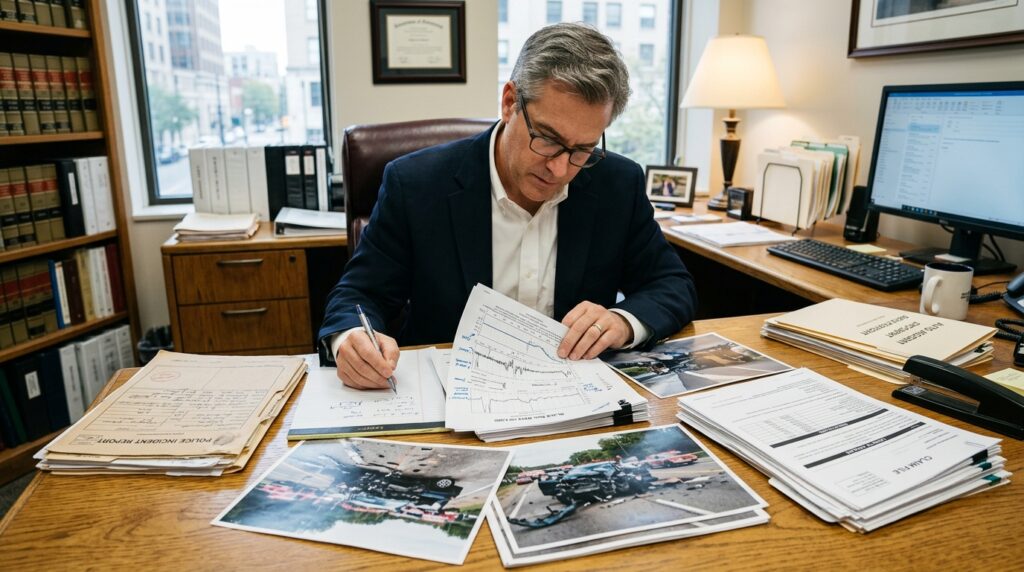

Victims should not assume punitive damages apply just because the crash was serious. Serious injuries alone do not prove malice. The claim needs facts showing extreme misconduct. That is why black box data, video, witness statements, and police findings matter.
Insurance may not treat punitive damages like ordinary losses
Punitive damages can create insurance disputes. Insurers may dispute whether the facts support them. They may also raise coverage issues depending on the policy and allegations. That makes the case more complex than a standard settlement discussion.
Victims should separate two questions. First, what compensatory damages cover the actual losses? Second, does the defendant’s conduct support punitive damages? Both questions need evidence, but they serve different goals.
How Victims Can Build a Strong LA Speed Crash Claim
A strong LA speed crash claim starts with evidence. The faster that evidence gets preserved, the harder it becomes for the other side to rewrite the story. This matters because extreme-speed cases often involve disputes over speed, signal timing, driver attention, impairment, racing, and whether the victim could have avoided the crash.
Start with medical care. Then document the scene, vehicle damage, road marks, debris, traffic signals, crosswalks, skid marks, airbags, and nearby cameras. Get the police report number. Save witness names. If another driver recorded the crash, ask them to preserve the original file.
For an external legal authority, readers can review California Civil Code § 3294, which governs punitive damages in California.
Black box and vehicle data can prove speed
Modern vehicles may store crash data through event data recorders, telematics systems, navigation logs, connected apps, or onboard safety systems. This data may show speed, throttle input, braking, steering, seat belt use, impact timing, and airbag deployment.
Do not wait to request this evidence. Vehicles can get repaired, sold, salvaged, or overwritten. A preservation letter may need to go out quickly to prevent loss of data.
Your article on Los Angeles Distracted Driving Accident Claims in 2026 also fits here. Phone, map, and screen evidence can show whether the driver was distracted while already traveling at a dangerous speed.
Camera footage can disappear within days
Nearby cameras may show the crash or the minutes before it. Look for dashcams, business cameras, apartment cameras, parking garage systems, traffic cameras, school cameras, doorbell cameras, and gas station footage. The best clip may not come from the impact point. It may come from a block away.
Fast action matters because many systems overwrite footage quickly. Save the names of nearby businesses and camera locations. If witnesses mention video, write that down immediately.
Medical records still drive the damages case
Even when speed evidence looks strong, medical proof still controls the value of the injury claim. Get care quickly. Follow treatment instructions. Keep emergency records, imaging reports, surgery notes, therapy records, prescriptions, work restrictions, and bills.
Insurance companies may admit speed but still attack the injury claim. They may argue that treatment was delayed, injuries were pre-existing, or pain complaints exceed the crash evidence. Organized medical records help counter those arguments.
Wrongful death and family claims need careful proof
High-speed crashes can cause fatal injuries. In those cases, the family may pursue wrongful death damages. The claim may include loss of financial support, loss of companionship, funeral costs, and other legally recognized losses. If the facts support punitive damages, the legal strategy may become more complex.
Families should preserve the crash evidence, medical records, death certificate, funeral records, financial records, and witness information. They should also avoid rushing into early insurance discussions before they understand the available policies and evidence.
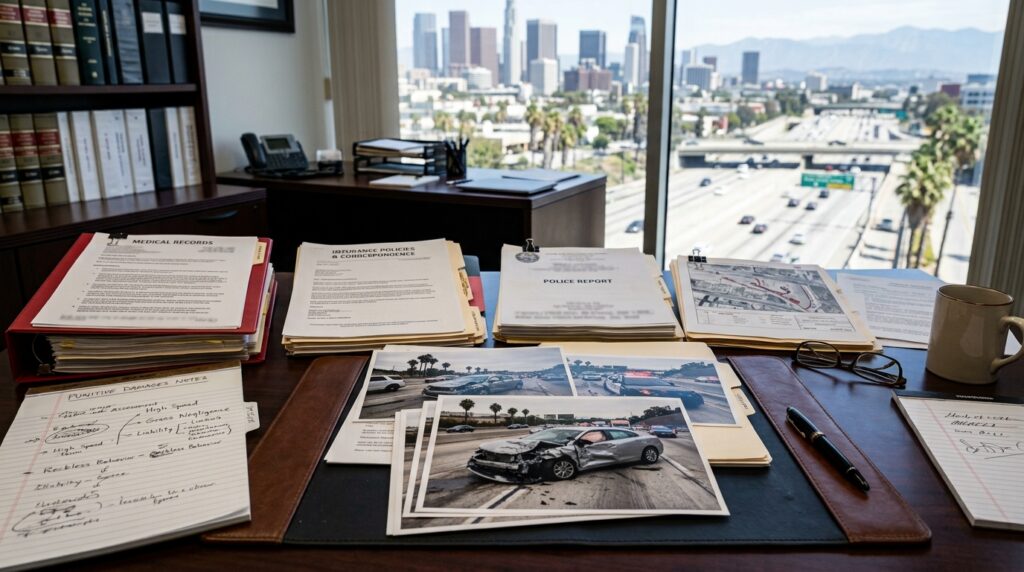

An LA speed crash claim can involve more than one reckless moment. It may involve racing, extreme speed, impairment, distraction, hit-and-run conduct, black box data, and punitive damages. The victim or family needs proof that shows the full danger, not just the final impact.
If you were injured in a high-speed Los Angeles crash, act quickly. Get medical care. Report the crash. Preserve video. Identify witnesses. Protect black box and vehicle data. Keep medical records organized. Then review whether the driver’s conduct supports more than a basic negligence claim.