
Los Angeles child passenger accidents can raise questions that do not appear in a typical adult injury claim. A crash may involve a car seat, booster seat, seat belt, airbag, vehicle defect, or installation problem. Parents may also need to preserve the child restraint itself as evidence.
The issue is especially timely in 2026. Los Angeles Police Department highlighted National Child Passenger Safety Week from September 20 through September 27. The campaign encourages parents and caregivers to use the correct car seat, booster seat, or seat belt for a child’s age and size.
California law also sets specific child-restraint requirements. Children under 8 generally need a child passenger restraint system in the rear seat unless an exception applies. Children who are at least 8 years old or at least 4 feet 9 inches tall may use a properly fitted seat belt.
After a serious collision, however, the legal analysis involves more than asking whether a child was restrained. Investigators may need to examine who caused the crash, how the child restraint was installed, whether the seat performed correctly, and whether the child suffered injuries that require long-term care.
How Child Passenger Safety Rules Affect Los Angeles Accident Claims
California’s child-restraint rules exist to reduce injury risk during a collision. The correct restraint changes as a child grows.
Very young children generally need rear-facing protection. Older children may move to forward-facing restraints and later to booster seats. Eventually, a child may use the vehicle’s seat belt once age and height requirements are met and the belt fits properly.
These rules can become relevant after an accident, but a restraint issue does not automatically decide who caused the crash.
California Car Seat and Booster Seat Requirements Matter
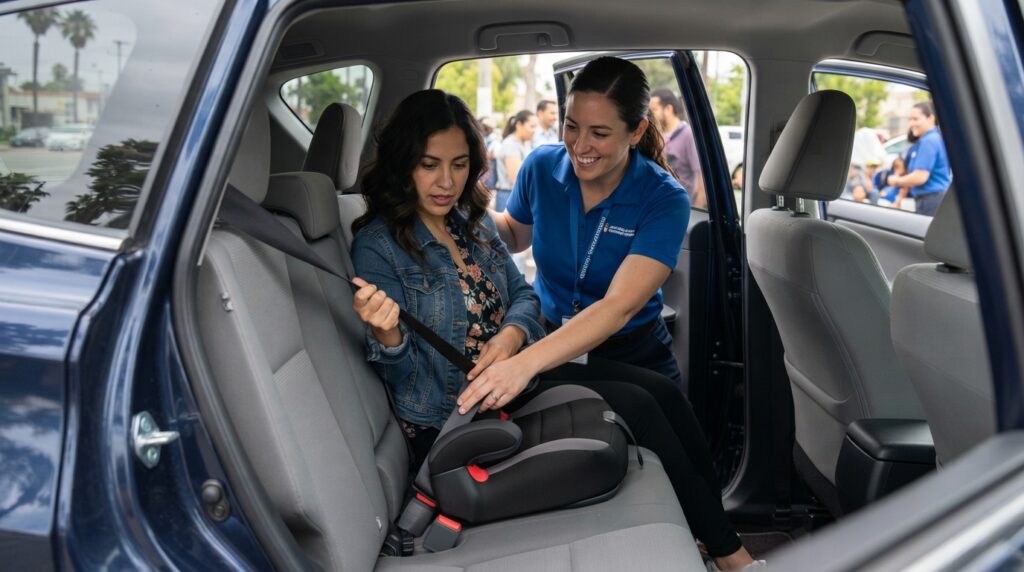
California requires children under 8 to ride in an appropriate car seat or booster seat in the rear seat, subject to limited exceptions. A child who reaches 8 years old or 4 feet 9 inches in height may use a standard seat belt.
The state also has special requirements for children under 2. Children who are under 2 years old, under 40 pounds, and under 3 feet 4 inches generally must ride in a rear-facing child passenger restraint.
A rear-facing car seat should not sit in front of an active passenger airbag. Airbag deployment can create serious injury risk for a child in that position.
Parents should also follow the height and weight limits listed by the car-seat manufacturer. State minimum requirements do not always mean a child should immediately move to the next restraint stage.
A Restraint Violation Does Not Automatically Eliminate an Injury Claim
Suppose another driver runs a red light and crashes into a vehicle carrying a child. The other driver’s negligence does not disappear simply because someone later argues that the child’s restraint was used incorrectly.
California follows comparative-fault principles. That means a dispute over restraint use may affect how parties argue about injury severity or damages, but it does not automatically transfer responsibility for causing the collision.
Investigators still need to determine why the vehicles collided. They may review signal timing, speed, witness statements, video, phone records, and vehicle data.
This is similar to other complex Los Angeles accident claims, where several issues can exist at the same time. Your existing article on Los Angeles personal injury and automobile accident claims provides additional background on fault and evidence.
Seat Belt Fit Matters After a Child Outgrows a Booster
Reaching the legal age threshold does not always mean a child fits an adult seat belt well.
California Highway Patrol recommends checking whether the child can sit fully against the vehicle seat, bend the knees comfortably, keep the lap belt low across the thighs, and position the shoulder belt across the collarbone rather than the neck.
A poor fit can change how forces move through the body during a crash. That makes photographs of the seating position and vehicle interior useful after a serious injury.
Parents should not recreate a dangerous scene after the accident. Instead, preserve available photos and document which seat position the child occupied.
The Car Seat Itself Can Become Important Evidence
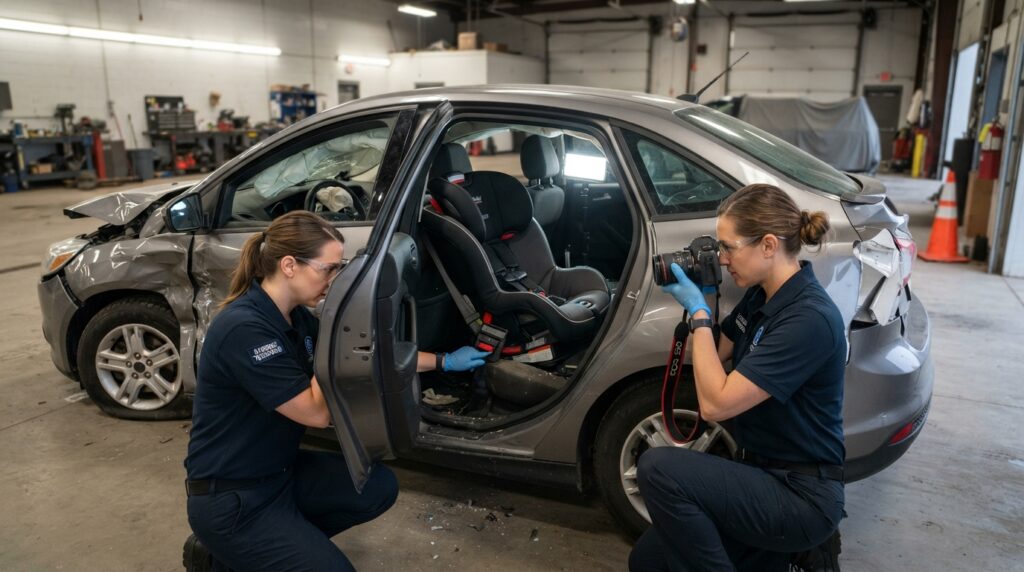
After a collision, many families focus on repairing the vehicle and replacing damaged property. The car seat may seem like another item to throw away.
That can be a mistake after a serious crash.
The restraint may contain evidence about impact forces, installation, belt routing, anchor use, harness position, structural damage, or a possible product problem.
NHTSA recommends replacing child car seats after moderate or severe crashes. It does not automatically require replacement after every minor crash. A crash only qualifies as minor under NHTSA’s guidance when all of its listed conditions are met.
Do Not Throw Away a Car Seat Before Documenting It
Photograph the car seat before anyone removes or disposes of it. Capture the front, back, labels, model number, manufacture date, harness, buckles, base, attachment points, and any visible damage.
Also photograph how the seat was positioned inside the vehicle when possible. Include the seat belt or lower anchors used to secure it.
Keep the instruction manual and purchase receipt if available. The model and manufacture date can help determine whether the seat had an open recall or exceeded the manufacturer’s recommended service life.
NHTSA advises consumers not to reuse a car seat after a moderate or severe crash. Manufacturer instructions may also require replacement under specific conditions. You can review the official NHTSA guidance on car-seat use after a crash.
How to Document a Los Angeles Child Passenger Injury Claim
Medical care should come first after a collision involving a child. Children may not describe pain the same way adults do. A young child may become unusually sleepy, irritable, quiet, fearful, or reluctant to move instead of clearly explaining a symptom.
Parents should watch for vomiting, confusion, headaches, limited movement, abdominal pain, breathing difficulty, weakness, or unusual behavior after a significant crash.
Follow medical advice and attend recommended follow-up appointments. Keep copies of emergency records, imaging, specialist reports, prescriptions, therapy records, and school-related restrictions.
Preserve Medical, Vehicle, and Digital Evidence Early
A strong child passenger claim may require several types of evidence.
Start with the crash scene. Save photographs of vehicle positions, damage, debris, road markings, traffic signals, intersections, and surrounding cameras.
Get witness contact information. Preserve dashcam footage and request nearby surveillance video quickly because some systems overwrite recordings within days.
The vehicle may also store electronic information. Event data recorders can sometimes provide details about speed, braking, seat-belt status, and other factors shortly before impact.
Keep photographs of the child’s seating position and restraint system. Save the car seat itself when the accident was serious or when restraint performance may become disputed.
If the crash happened near a school, your existing Los Angeles automobile accident guides include coverage of school-zone crashes and other traffic-safety issues that may help readers understand additional fault questions.
Child Injury Claims May Need to Account for Future Effects
A child’s injury can affect more than immediate medical bills.
A fracture may interfere with sports or school activities. A traumatic brain injury may affect concentration, memory, behavior, or learning. Scarring can require later treatment. Serious orthopedic injuries may need future monitoring as the child grows.
That makes early settlement decisions especially important.
Parents should understand the medical outlook before treating the first insurance offer as the full value of the claim. Some long-term effects may not become clear during the first weeks after a collision.
Keep school records when the injury causes absences or accommodations. Save documentation from physical therapy, counseling, specialists, and other providers.
Insurance adjusters may also ask questions about the car seat, booster seat, or seat belt. Answer carefully and do not guess about details you do not remember.
Photographs and product records often provide better evidence than trying to reconstruct the installation from memory months later.
Los Angeles child passenger accidents require the same basic investigation as other collisions, but they can include an additional layer of restraint and product evidence.
The key questions may include who caused the crash, where the child was sitting, which restraint was used, whether the restraint fit the child properly, whether it sustained crash damage, and whether the injuries may create future medical or educational needs.
Do not discard the car seat too quickly. Do not repair or dispose of important vehicle evidence before documenting it. Save medical records and crash photographs. Follow the child’s recovery closely.
LAPD’s 2026 Child Passenger Safety Week campaign also offers a useful preventive reminder. Parents and caregivers can contact LAPD traffic divisions for free car-seat installation checks by certified child passenger safety technicians.
California DMV and CHP also provide current guidance on restraint requirements. Those resources can help families confirm when a rear-facing seat, forward-facing seat, booster, or standard seat belt is appropriate.
A serious crash involving a child can create stressful decisions for a family. Good documentation cannot undo the accident, but it can preserve important facts while doctors evaluate the child’s injuries and insurers investigate the collision.
This article provides general educational information and does not constitute legal or medical advice. Child-restraint requirements, injury claims, product issues, and insurance questions depend on the facts of each collision and applicable law.