
A Los Angeles delivery driver accident claim can be more complicated than a normal car accident. At first, the crash may seem simple. A delivery driver hit another vehicle, pedestrian, cyclist, scooter rider, or parked car. However, the real questions often go deeper. Was the driver working through an app? Was the driver rushing to complete an order? Did the driver stop in a bus lane, bike lane, driveway, or red zone? Was the driver logged into a delivery platform when the crash happened?
These questions matter in 2026 because delivery traffic is part of daily life in Los Angeles. Food delivery, grocery delivery, retail delivery, pharmacy delivery, and same-day package delivery all place more drivers on busy streets. Those drivers often move between restaurants, apartments, hotels, offices, parking lots, and curbside pickup zones. As a result, delivery crashes may involve phone evidence, app records, route pressure, unsafe stops, and complicated insurance issues.
This article is for educational purposes only. It is not legal advice. Still, it can help injured people understand how a Los Angeles delivery driver accident claim may be investigated, what evidence may matter, and why early documentation can protect the case.
Why Delivery Driver Accident Claims Are Different in Los Angeles
Delivery driver crashes are different because the driver may not be acting only as a private motorist. The driver may be completing an order, heading to a pickup, dropping off food, transporting packages, or following app instructions. Therefore, the case may involve both ordinary negligence and business-related driving.
Insurance can become difficult fast. A personal auto insurer may argue that the driver was using the car for paid delivery work. A delivery platform may argue that its coverage does not apply because the driver was not in the correct work period. Meanwhile, the injured person may be dealing with medical bills, car repairs, missed work, and pain.
Distraction is another major issue. Delivery drivers often use phones for navigation, order acceptance, customer messages, pickup instructions, delivery photos, and route changes. NHTSA reports that distracted driving caused 3,208 deaths in motor vehicle crashes involving distracted drivers in 2024. You can review that outside authority here: NHTSA distracted driving information.
California also has strict phone-use rules. The California Office of Traffic Safety explains that drivers cannot use a cellphone or similar electronic communication device while holding it in their hand. You can review that guidance here: California OTS distracted driving guidance.
App distraction can become central evidence
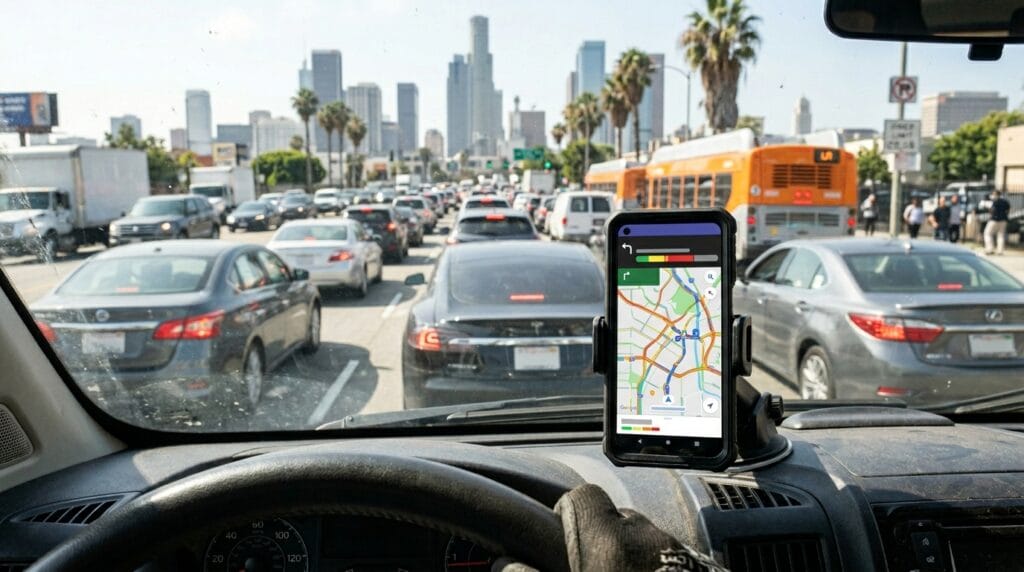
App distraction may become one of the most important issues in a delivery crash. A driver may say they were watching the road. However, phone data, app activity, delivery records, and route logs may show a different story.
A delivery driver may have been accepting an order, checking a pickup time, following GPS, reading drop-off notes, calling a customer, or confirming delivery. Even a short glance can matter. In Los Angeles traffic, a few seconds of lost attention can cause a rear-end crash, unsafe turn, sideswipe, crosswalk collision, or sudden stop.
This issue connects directly with your site’s guide on Los Angeles distracted driving accident claims in 2026. That article explains why phone, map, and screen evidence can help prove what happened before impact.
Phone records, route logs, and app status may matter
Several types of digital evidence may help a Los Angeles delivery driver accident claim. Phone records may show calls, messages, or data activity near the crash time. App logs may show whether the driver was logged in, accepting an order, navigating, picking up food, or completing a drop-off.
Route data may also help. It can show where the driver was going, whether they were near a restaurant or delivery address, and whether they made sudden stops or detours. Dashcam footage, traffic cameras, store cameras, apartment cameras, and doorbell cameras may also help build a timeline.
Unsafe curbside stops can create serious crash risks
Los Angeles has crowded curbs. Delivery drivers often stop near restaurants, apartments, hotels, shopping centers, offices, schools, and entertainment districts. Sometimes they double park. Sometimes they block bike lanes or bus lanes. In other cases, they stop suddenly when a pickup location appears.
Those choices can create real danger. A driver who stops without warning can cause a rear-end collision. A delivery car blocking a bike lane can push cyclists into traffic. A driver who opens a door near moving traffic can injure a cyclist, scooter rider, or pedestrian. Because of that, curbside behavior may become part of the fault investigation.
Insurance disputes are common in delivery crashes
Insurance coverage may depend on the driver’s exact work status. Was the driver logged into the app? Had the driver accepted an order? Was the driver heading to a pickup? Was the driver carrying food or packages? Had the delivery already ended? Each answer can affect which policy may apply.
This is similar to some rideshare cases, although delivery and rideshare rules are not always the same. For related background, read Uber and Lyft accidents in Los Angeles. Rideshare and delivery claims both may involve app status, layered insurance, and company responsibility disputes.
Coverage issues matter because California’s minimum auto insurance limits may still be too low for serious injuries. If the driver has limited coverage, the injured person may need to examine every possible policy. Your site’s guide on California auto insurance minimums can help readers understand why policy limits matter.
Personal, platform, and commercial coverage may overlap
A delivery crash may involve personal insurance, platform coverage, commercial coverage, employer coverage, or vehicle owner coverage. The driver may use a personal car. Another company may own the vehicle. A restaurant, courier company, grocery service, or app platform may also be connected to the trip.
Because of that, injured people should document all visible business details. Take photos of delivery bags, package labels, app logos, company markings, license plates, and driver statements. A small detail at the scene may later help identify coverage or responsible parties.
How to Protect a Delivery Driver Accident Claim
After a delivery driver crash, medical care comes first. Some injuries appear immediately. Others become worse later. Neck pain, back pain, headaches, dizziness, numbness, shoulder pain, knee pain, chest pain, and anxiety symptoms should be documented early.
Next, collect evidence if it is safe. Take photos of vehicle positions, damage, skid marks, traffic signals, curb markings, bike lanes, bus lanes, delivery bags, company logos, and nearby cameras. Also write down what the driver says about where they were going or whether they were working.
For a broader crash checklist, read what to do after a car accident in Los Angeles. The same first steps can help in a delivery driver claim, but these cases usually need additional app and insurance evidence.
Do not rely only on the driver’s explanation. A driver may say they were only following GPS. They may say they stopped for “just a second.” However, those details may still show distraction, unsafe stopping, or route pressure. The facts should be documented before memories change.
Strong claims connect crash evidence with medical proof
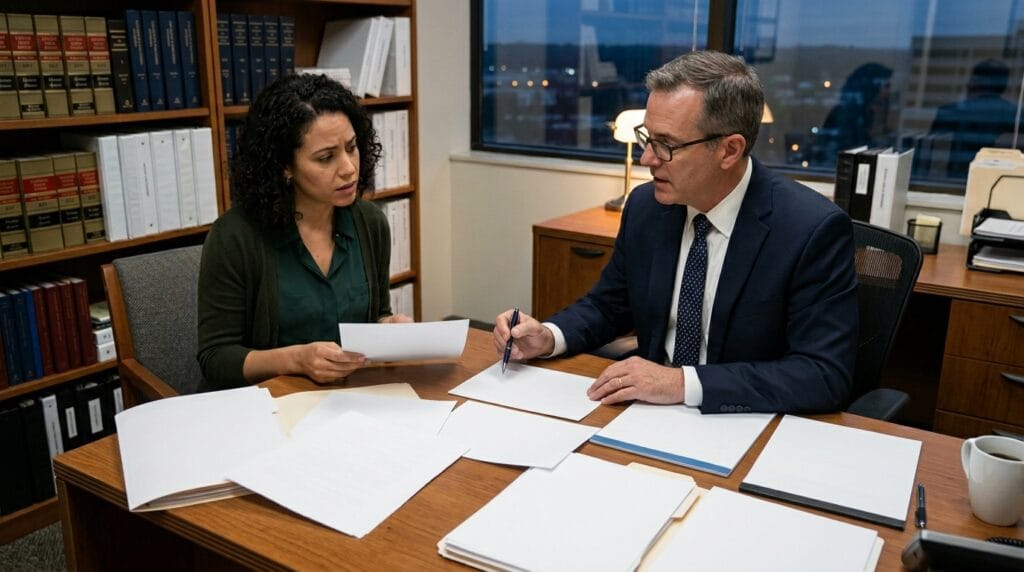
A strong claim needs both fault evidence and medical proof. Fault evidence explains why the crash happened. Medical proof explains what the crash caused. If either side is weak, the insurance company may use that weakness to reduce the claim.
Fault evidence may include photos, witness statements, police reports, phone records, app logs, dashcam footage, vehicle damage, and business surveillance video. Medical proof may include emergency care records, imaging, treatment notes, prescriptions, physical therapy notes, work restrictions, and future care recommendations.
Technology can also help. Many cars now have cameras, event data, connected systems, or driver-assistance features. For more on digital proof, read AI dashcams and digital evidence in Los Angeles car accident claims.
Fault arguments should also be handled carefully. California uses comparative fault principles, which means insurers may try to assign part of the blame to the injured person. For background, review how fault is determined in California car accidents.
Do not give broad statements before the facts are clear
Insurance adjusters may ask for a recorded statement soon after the crash. Be careful. You may not yet know the full injury diagnosis. You may also lack app data, phone records, video, witness statements, and insurance information.
Avoid guessing. Do not accept blame because the delivery driver says they were in a hurry or did not see you. Do not minimize symptoms while they are still developing. Also, do not assume one insurance policy is the only possible source of recovery.
In the end, a Los Angeles delivery driver accident claim is about modern evidence. The crash may involve app distraction, unsafe curbside stops, route pressure, phone records, commercial coverage, and insurance disputes. The sooner that evidence is preserved, the stronger the claim can become.
Delivery traffic is not going away in Los Angeles. Injured people should protect themselves by getting medical care, documenting the scene, saving digital evidence, identifying the delivery platform or company, and reviewing insurance before making broad statements. In 2026, the strongest delivery crash claims are built with fast action and clear proof.