
Los Angeles distracted driving accident claims in 2026 deserve a closer look because the issue now goes far beyond texting. That older example still matters, but it no longer tells the whole story. Today, many crashes involve drivers checking maps, holding phones at red lights, glancing at notifications, tapping mounted screens, watching short videos, or trying to manage music and messaging in traffic. For injury victims, that shift changes how a case gets built. It also changes the type of evidence that can decide whether the claim settles well or turns into a fight.
Los Angeles makes this problem even worse. Traffic is slow, crowded, and unpredictable. Drivers stay behind the wheel for long stretches and often rely on navigation apps or in-car screens almost nonstop. One brief glance away from the road can trigger a rear-end collision, a bad lane-change crash, an intersection impact, or a chain-reaction freeway wreck. From a legal standpoint, distracted driving cases may look simple at first, but they often grow into disputes over timing, phone activity, digital records, witness statements, and fault allocation.
This topic also fits naturally with the content already on your site. It builds on Distracted Driving Remains California’s Leading Cause of Crashes in 2025, while giving readers a fresher 2026 angle. It also connects well with AI Dashcams and Digital Evidence: How Technology Is Changing Car Accident Claims in Los Angeles, because modern distraction cases often depend on digital proof, not just driver admissions.
Many people assume a distracted-driving case proves itself. It does not. The other driver may deny touching the phone. An insurer may argue the driver only glanced at a mounted map. In some cases, the defense tries to shift the focus onto your reaction time or traffic conditions. Los Angeles distracted driving accident claims in 2026 need more than outrage. They need evidence, strategy, and a clear story that ties the distraction to the crash and the crash to the injury.
Why This Topic Matters in Los Angeles Right Now
The reason this topic is trending is straightforward. Distracted driving remains one of the easiest crash causes to recognize, yet it can still be hard to prove without the right evidence. At the same time, phone use inside vehicles has become more layered. A driver may not be typing out a text. Instead, they may hold a map, clear a notification, switch a route, or touch a large center screen. Those details matter because a claim often rises or falls on how the conduct gets described.
Hands-free does not mean risk-free
Many drivers think they are safe from blame if they were not actively texting. Real crash litigation does not work that way. The core question is not whether the driver used the exact wrong app. The real question is whether the driver took attention away from the roadway at the wrong time. A person can create serious risk while checking directions, tapping a playlist, or staring at a mounted screen for too long. In heavy Los Angeles traffic, even a short distraction can be enough.
Maps, videos, and mounted phones can still support negligence
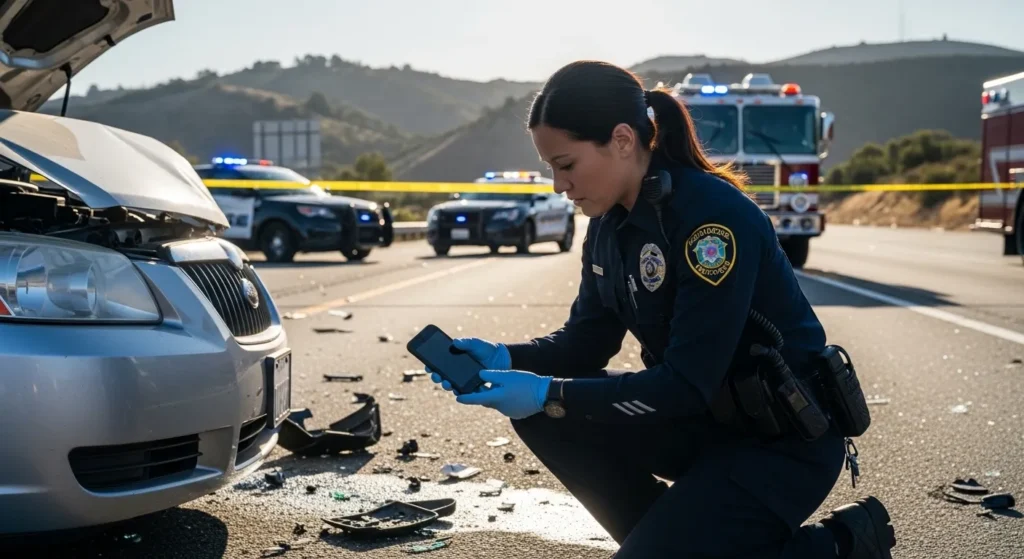
That point matters because drivers often try to frame phone-related distraction as harmless. Some say they only looked at directions. Others claim they were just changing a song. Another common excuse is that the phone was mounted, so the use must have been legal and safe. Those arguments do not end the case. A mounted device can still distract a driver. A map can still pull eyes off the road. A video or social app can still show poor judgment. When that device use explains why the driver missed slowing traffic, drifted between lanes, or entered an intersection late, it may support negligence.
Readers who want a public-safety reference can review the California Highway Patrol’s hands-free law reminder. In a civil claim, the practical point is simple: the more clearly the distraction explains the collision, the stronger the liability argument becomes.
Evidence now matters more than excuses
Modern distracted-driving claims are evidence-heavy. Many drivers will not admit what they were doing before impact. Victims often have to rely on other sources instead. Phone records may help. App timestamps may help. Dashcam footage, surveillance video, black-box data, vehicle positioning, and witness statements can all matter. If the crash happened near a business, parking lot, or traffic camera, nearby video may capture the seconds before impact and cut through later denials.
Rear-end and intersection crashes often start with one glance down
Some distracted-driving patterns repeat again and again. A driver looking down at a device fails to brake for stopped traffic and causes a rear-end collision. Another driver glancing at a map misses a signal change and enters an intersection too late. A third driver touching a center console drifts out of the lane and sideswipes another vehicle. That is why this topic pairs naturally with Rear-End Car Accidents in Los Angeles: Who Is at Fault and What Victims Should Do. The accident pattern may look familiar, but the cause often hides in a device, a screen, or a digital trail the victim has to uncover quickly.
Digital evidence can become extremely valuable for that reason. A crash that seems like a routine fender bender may actually involve phone distraction, delayed braking, and a stronger injury claim than the insurer wants to admit. When that happens, the case needs more than a police report. It needs a disciplined effort to preserve data before it disappears or gets overwritten.
What Victims Should Do After a Suspected Distracted Driving Crash
Injured people should act as though the other side will dispute the facts from day one. The police report may miss important details. The driver may change the story later. Insurance companies rarely connect the crash to the phone use without resistance. Early steps often determine whether a distracted-driving claim grows stronger or stays vulnerable.
Insurance companies still try to shift blame
Even when distraction seems obvious, insurers still look for ways to soften it. One adjuster may argue traffic stopped suddenly. Another may say you braked hard, changed lanes, or shared fault. Some carriers claim the phone had nothing to do with the impact. Others try to treat the collision as low-value before the medical picture becomes clear. Victims should stay careful with recorded statements and early settlement pressure.
The first week can shape the entire claim
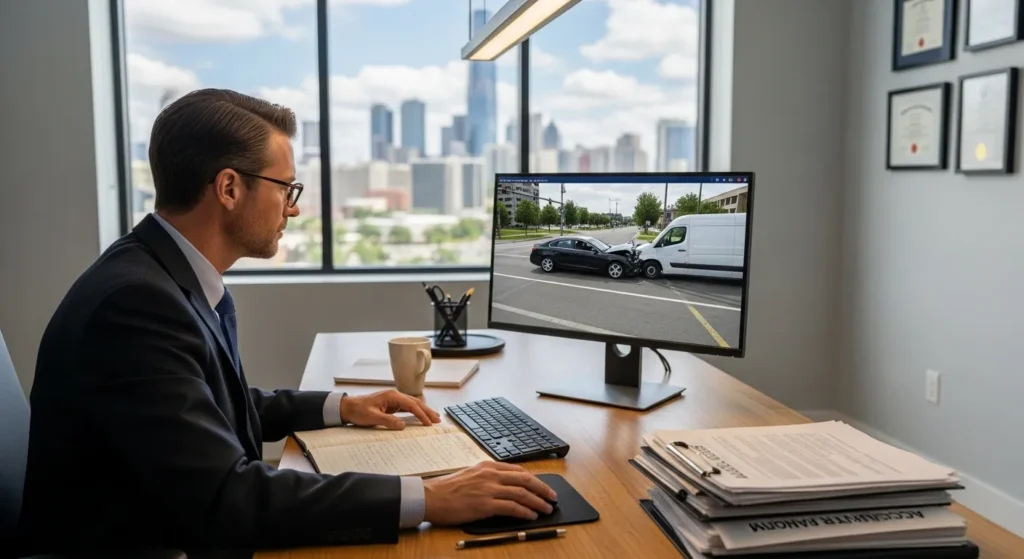
Get medical care right away. Photograph the vehicles, the roadway, and any visible injuries. Save witness names and contact details. Write down what you remember while it is still fresh, including whether the other driver looked down, held a phone, or reacted late. Check whether nearby stores, homes, or traffic systems may have video. Preserve dashcam footage if you have it. Those steps are not minor. They can decide whether distraction gets proven or brushed aside.
This is also where your internal content can help readers move deeper into the site. A person dealing with insurer pressure should also read Top 5 Mistakes to Avoid When Filing a Car Accident Claim in Los Angeles. Many strong cases lose value because victims wait too long, speak too freely, or accept the insurer’s first version of events.
Why coverage issues can still complicate the case
Distracted-driving crashes do not always end with a fully insured driver who admits fault. Sometimes the at-fault driver carries very little coverage. In other cases, the driver leaves the scene. Some claims end up turning into uninsured motorist fights even though the victim did nothing wrong. Readers need to understand that possibility early because it can change the entire recovery strategy.
UM/UIM and hit-and-run claims still matter in Los Angeles
That is why this topic also connects naturally with Understanding Uninsured Motorist Coverage in California: Protecting Yourself on LA Roads and How to Handle Hit-and-Run Accidents in Los Angeles: Legal Steps and Compensation. A distracted driver who flees or carries low limits creates a very different path to compensation. When that happens, victims need to know which coverage may apply and what steps to take next.
From an SEO standpoint, this topic is strong because it matches real search intent. People do not search for distracted driving only because they want statistics. Most search after a rear-end crash, an intersection collision, insurer pressure, or a dispute about whether map use matters. They want to know what proof counts, what steps to take, and whether phone-related distraction can actually help their case. This article answers those questions in a direct way while also strengthening your site’s internal link structure.
The bottom line is clear. Los Angeles distracted driving accident claims in 2026 are not limited to texting. They often involve maps, mounted devices, infotainment screens, delayed braking, and digital evidence that must be preserved fast. When a driver stops paying attention and someone gets hurt, the legal issue is not whether the excuse sounds ordinary. The legal issue is whether the distraction caused the crash and what evidence proves it. That is where a strong claim begins.