
A Los Angeles Metro bus accident claim can involve more legal issues than a normal car crash. At first, the incident may look simple. A bus hit a vehicle, a passenger fell inside the bus, a pedestrian was struck near a stop, or a cyclist was injured near a bus lane. However, the real investigation often goes deeper.
Public transit crashes may involve government claim rules, bus operator conduct, route schedules, transit video, bus lane design, traffic signals, third-party drivers, passenger movement, and medical proof. Because of that, injured people should not treat a Metro bus accident like a basic insurance claim.
Los Angeles also has a busy transit environment. Metro buses share roads with rideshare vehicles, delivery drivers, cyclists, pedestrians, scooters, parked cars, construction zones, and freeway traffic. As a result, fault may not always fall on one party. A bus operator, another driver, a public entity, a contractor, or a vehicle owner may need review.
This article is for educational purposes only. It is not legal advice. Still, it can help injured people understand how a Los Angeles Metro bus accident claim may be investigated in 2026, what evidence may matter, and why deadlines should be reviewed quickly.
Why Los Angeles Metro and Bus Accident Claims Are Different
Metro and bus accident claims are different because public transportation systems operate under policies, schedules, safety procedures, and public-entity rules. A passenger car crash usually starts with two drivers and two insurance companies. A bus crash may involve a transit agency, bus operator, private contractor, maintenance provider, another motorist, and government claim requirements.
LA Metro says its safety support work includes law enforcement, Transit Ambassadors, 24/7 monitoring, emergency systems, crisis teams, and design upgrades. You can review Metro’s safety information here: LA Metro Safety & Support.
That safety context matters because transit systems often have more records than ordinary drivers. A bus may have interior cameras, exterior cameras, GPS tracking, route data, radio communications, maintenance records, driver logs, passenger reports, and incident documentation. These records can help explain what happened.
However, evidence does not preserve itself. Video can be overwritten. Buses can return to service. Witnesses can leave the area. Medical symptoms can worsen after the scene clears. Therefore, early action matters.
Bus lanes, stops, and intersections can affect fault
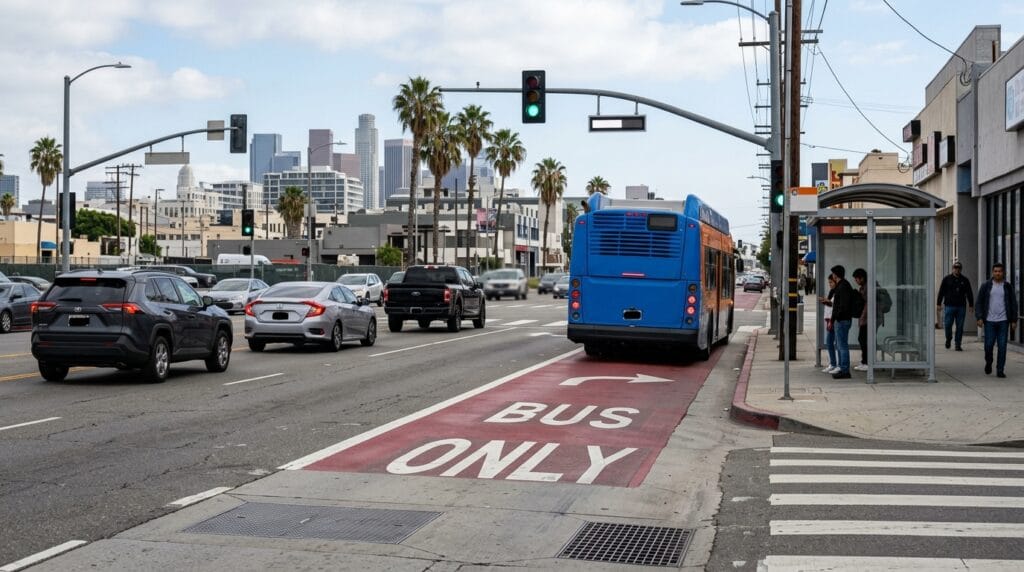
Los Angeles bus crashes often happen near intersections, bus stops, curb zones, or dedicated lanes. These areas can create conflict between buses, passenger vehicles, cyclists, pedestrians, and delivery drivers. A bus may pull away from a stop. A car may turn across a bus lane. A pedestrian may cross near the front of a bus. A cyclist may be forced around a blocked curb.
In those situations, fault depends on details. Investigators may need to review signal timing, lane markings, bus position, vehicle speed, mirror checks, right-of-way rules, and visibility. A bus operator may have followed procedure. Another driver may have cut in suddenly. Or, the bus may have moved before it was safe.
This is why scene photos matter. They can show lane markings, curb color, traffic lights, stop location, crosswalks, bike lanes, parked vehicles, construction signs, and sightline problems. For general post-crash steps, read what to do after a car accident in Los Angeles.
Bus lane crashes can involve more than the bus driver
A bus lane crash may involve another driver who entered the lane illegally, stopped suddenly, or made an unsafe turn. It may also involve a rideshare driver, delivery driver, cyclist, scooter rider, or pedestrian. Therefore, a claim should not focus only on the bus without reviewing every moving part.
Fault disputes can become aggressive. One party may say the bus had priority. Another may say the bus operator failed to yield. A third may argue that lane markings or signal timing created confusion. Because California uses comparative fault principles, insurers may try to divide blame between multiple parties. For more background, read how fault is determined in California car accidents.
Transit video can be powerful, but it must be preserved
Transit video may become one of the most important forms of evidence. Bus cameras may show passenger movement, vehicle position, operator behavior, road conditions, traffic signals, or another driver’s actions. Exterior cameras may show how the crash happened from angles that a witness could not see.
Still, injured people should not assume video will always be available later. Transit agencies and nearby businesses may keep footage for limited periods. Because of that, preservation requests should happen quickly. This issue connects with your site’s guide on AI dashcams and digital evidence in Los Angeles car accident claims.
Passenger injuries inside a bus can be disputed
Not every Metro bus injury involves a collision with another vehicle. A passenger may fall because the bus braked suddenly, accelerated harshly, turned sharply, or stopped without warning. These cases can be difficult because the bus may not show visible damage.
Insurance representatives may argue the passenger simply lost balance. However, that may not tell the full story. A sudden stop may have happened because another car cut off the bus. It may also have happened because the operator followed too closely, reacted late, or drove too fast for conditions.
Passenger evidence matters. A rider should report the incident, ask for the bus number if possible, document the route, note the stop or intersection, and identify witnesses. Photos of injuries, shoes, bus interior conditions, and the surrounding location may also help.
Injuries inside a bus can be harder to prove
Bus passenger injuries may include wrist fractures, shoulder injuries, back injuries, neck strain, knee trauma, head injuries, and hip injuries. Some riders may feel embarrassed after falling and leave without reporting the incident. That can create problems later.
Medical care should come first. A prompt evaluation can connect the injury to the bus incident. It can also document symptoms before the insurer claims they came from something else. If pain, dizziness, numbness, swelling, or difficulty walking appears after the incident, do not ignore it.
Evidence and Deadlines in a Los Angeles Metro Bus Accident Claim
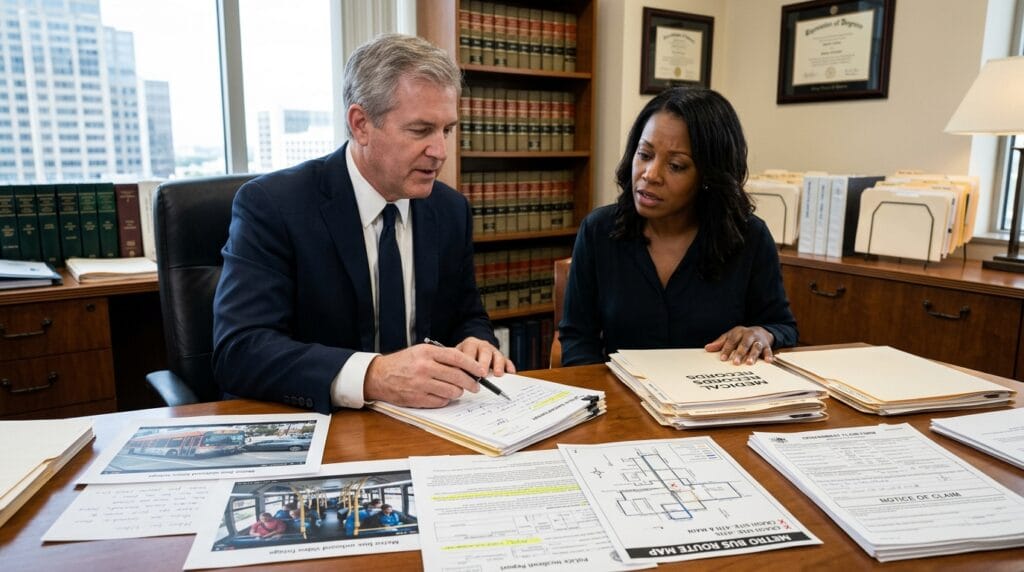
A strong Los Angeles Metro bus accident claim needs both crash evidence and medical proof. Crash evidence explains how the incident happened. Medical proof explains what injuries resulted. If either side is weak, the claim may become harder to prove.
Crash evidence may include bus video, GPS data, route information, operator reports, witness statements, police reports, photos, traffic camera footage, dashcam video, and nearby business surveillance. Medical proof may include emergency records, imaging, doctor notes, physical therapy records, pain logs, work restrictions, and future treatment recommendations.
Distraction evidence may also matter. Another driver may have looked at a phone, GPS screen, rideshare app, or delivery app before the collision. If screen use played a role, read Los Angeles distracted driving accident claims in 2026.
Automated traffic data may also become relevant in certain corridors. If the crash happened near a speed enforcement area or dangerous intersection, your site’s article on Los Angeles speed camera accident claims in 2026 may help readers understand how enforcement data can affect fault analysis.
Public entity and multiple-party claims need early review
When a public entity may be involved, deadlines can be shorter than many injured people expect. California government claim procedures may require action before a normal personal injury lawsuit deadline. Sacramento Superior Court’s Government Claims Act guide explains typical steps for a six-month claim. You can review it here: Government Claims Act guide.
This deadline issue can be dangerous because injured people may focus only on recovery at first. They may assume they have plenty of time. However, if a transit agency, public bus system, public employee, or government-controlled roadway issue is involved, timing should be reviewed early.
Multiple-party claims also need careful review. A bus crash may involve a public entity and a private driver. It may involve a rideshare vehicle, delivery driver, contractor, road maintenance issue, or vehicle defect. If the crash involved Uber or Lyft, read Uber and Lyft accidents in Los Angeles.
Government claim deadlines should not be ignored
Do not wait to preserve evidence or review deadlines. A person injured in a bus accident may need medical treatment, rest, transportation help, and time away from work. Even so, the legal clock may keep running.
The safest approach is to document early. Save photos, medical records, witness names, bus route information, ticket or TAP records, app receipts, police report details, and any communication with Metro or another agency. Also write down the date, time, bus number, route, direction of travel, stop location, and crash location.
In the end, a Los Angeles Metro bus accident claim is evidence-heavy. Transit video, operator records, route data, bus lane details, medical documentation, and public-entity deadlines may all matter. Injured people should not rely on memory alone.
Los Angeles transit crashes can involve public agencies, private drivers, digital evidence, and fast-changing scenes. The stronger the early documentation, the harder it becomes for an insurer or responsible party to minimize the claim. If you were hurt on or near a Metro bus, get medical care, report the incident, preserve evidence, and review the deadlines before key proof disappears.