
Los Angeles move over law accident claims matter more in 2026 because California changed the roadside safety rules in a way many drivers still do not fully understand. For years, many people associated the move over law only with police cars, ambulances, fire trucks, and tow trucks. That is no longer the full picture. The law now reaches a broader group of stationary vehicles using hazard lights or warning devices, and that shift can affect how fault is argued after a crash on Los Angeles roads.
That makes this topic more than a technical legal update. It changes the way accident victims, insurers, and attorneys may look at freeway shoulder collisions, roadside assistance crashes, and impacts involving stopped drivers who thought turning on hazard lights was enough to keep them safe. In Los Angeles, where crowded freeways, narrow shoulders, sudden breakdowns, and distracted driving all collide in the worst way, the new rule gives injury claims a fresh angle that did not exist in quite the same form before.
This is exactly why Los Angeles move over law accident claims deserve their own discussion. A driver may get out to inspect a flat tire. A family may be waiting beside a disabled car. A delivery driver may be stopped with hazard lights on. A work truck may be parked along the shoulder with warning cones. In each of those situations, the passing driver still has duties. If those duties are ignored and someone gets hurt, the legal analysis can become much stronger than many people expect.
This article also fits naturally with your existing content. Readers who want more context can continue to AI Dashcams and Digital Evidence: How Technology Is Changing Car Accident Claims in Los Angeles, Los Angeles Speeding Accident Claims in 2026, and your broader Automobile Accident section. Those pieces support this topic well because roadside crashes often involve the same core themes: speed, distraction, lane choice, and proof.
Why Los Angeles Move Over Law Accident Claims Matter More in 2026
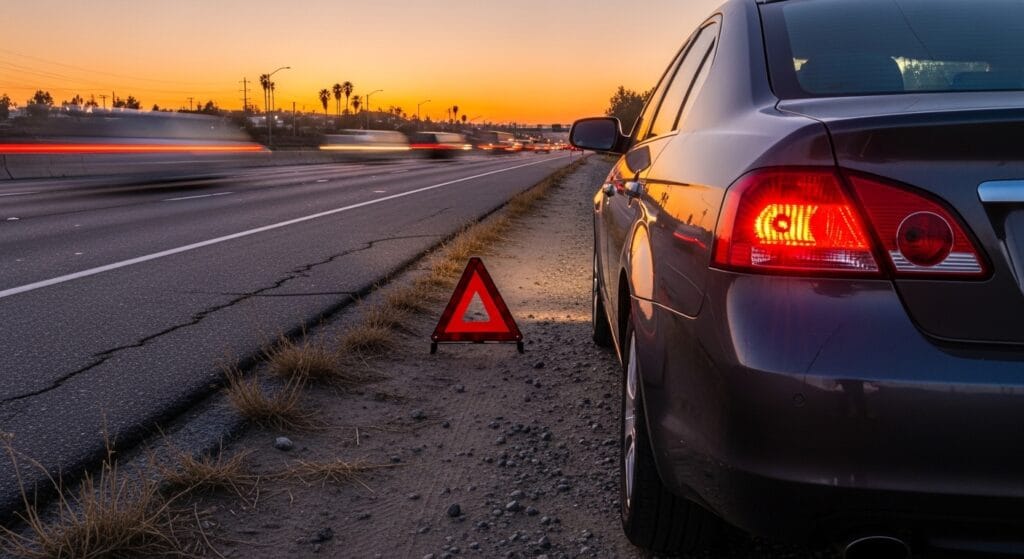
Los Angeles move over law accident claims matter more now because the rule is broader and the roads are still unforgiving. Los Angeles drivers break down on freeways, pull to the shoulder after minor contact, wait for roadside help, or stop with hazards on while trying to figure out what to do next. Those moments are dangerous because other drivers are often moving too fast, following too closely, staring at maps or phones, or changing lanes too late.
The expanded law matters because it makes the roadside duty clearer. If a driver approaches a stationary vehicle showing hazard lights or another warning device, the passing driver may be required to move over when it is safe and practical, or slow down and use caution when a lane change cannot safely be made. That means the defense can no longer treat many shoulder-side collisions like random bad luck or unavoidable freeway chaos.
What changed and why it matters after a crash
The old public understanding of move over laws was narrow. Most people thought only official vehicles counted. The 2026 change matters because ordinary drivers in distress now fit more clearly into the roadside protection conversation. If a vehicle is stopped and visibly signaling trouble, the driver approaching that scene has to respond with care. That matters after a crash because it gives injury victims a stronger framework for arguing that the danger should have been recognized before impact.
Hazard lights now matter more in liability arguments
Hazard lights do not make a stopped vehicle invincible, and they do not excuse unsafe stopping. But they can become powerful evidence that the roadside condition was visible and should have triggered caution. If the injured driver or passenger had hazards on, warning cones out, or another visible indicator of a disabled vehicle, the passing motorist may have a harder time arguing the scene was impossible to recognize in time. That does not automatically win the case, but it changes the tone of the negligence analysis.
Los Angeles roadway conditions make these crashes worse
Los Angeles is especially hard on stranded motorists. Freeway shoulders are often narrow. Traffic speeds change unpredictably. Drivers weave aggressively around congestion. Visibility can be poor around curves, ramps, and merges. A simple breakdown can turn into a catastrophic event in seconds. That is why these cases are not just about whether a car was stopped. They are about whether the passing driver reacted reasonably to a clear roadside hazard in a city where caution should already be part of survival.
How Fault and Compensation Work in Los Angeles Move Over Law Accident Claims
In most Los Angeles move over law accident claims, the legal fight will still come down to negligence, comparative fault, and damages. The injured person still has to show what the passing driver did wrong and how that misconduct caused the injuries. But the expanded roadside duty can sharpen that argument. A plaintiff may now be able to frame the crash not simply as “the other driver drifted” or “the other driver was inattentive,” but as a failure to follow a clearer statutory safety obligation around a visibly stopped vehicle.
That matters because insurers look for excuses in shoulder and roadside cases. They may say the stopped driver chose a bad location. May argue the vehicle was too close to travel lanes. Claim the injured person stepped out carelessly. Sometimes those arguments carry some weight. But they do not erase the duty of an approaching driver to slow down, move over when possible, and respond safely to visible roadside distress.
Who may be at fault in a roadside collision
The passing driver is often the obvious defendant, but not always the only one. A commercial vehicle operator may be involved. A rideshare driver may have stopped or merged unsafely near the scene. Another vehicle may have forced the striking car toward the shoulder. In some cases, roadway design, poor signage, or a missing barrier may become part of the story. California comparative fault rules also mean the injured person’s own choices may still be examined, especially if they stopped in an unsafe location when safer alternatives existed.
Still, that is exactly why this topic is useful for your audience. Many victims assume roadside crashes are impossible to prove because the defense will always blame the stranded person. That is too simplistic. If the stopped vehicle was visible, hazards were on, and the passing driver had room or time to react, the victim may have a much stronger claim than they realize.
What evidence makes these cases stronger
Evidence matters immediately in these cases. Photos showing the shoulder, lane widths, hazard lights, cones, reflective triangles, and final vehicle positions can be critical. Dashcam footage can be even better. Witness statements matter because they can describe speed, lane changes, distraction, and whether the striking driver had space to move over. If your readers have already seen your article on AI dashcams, this is the perfect place to reinforce that digital evidence often decides disputed crash claims before a case ever reaches trial.
What compensation may be available after a move over crash
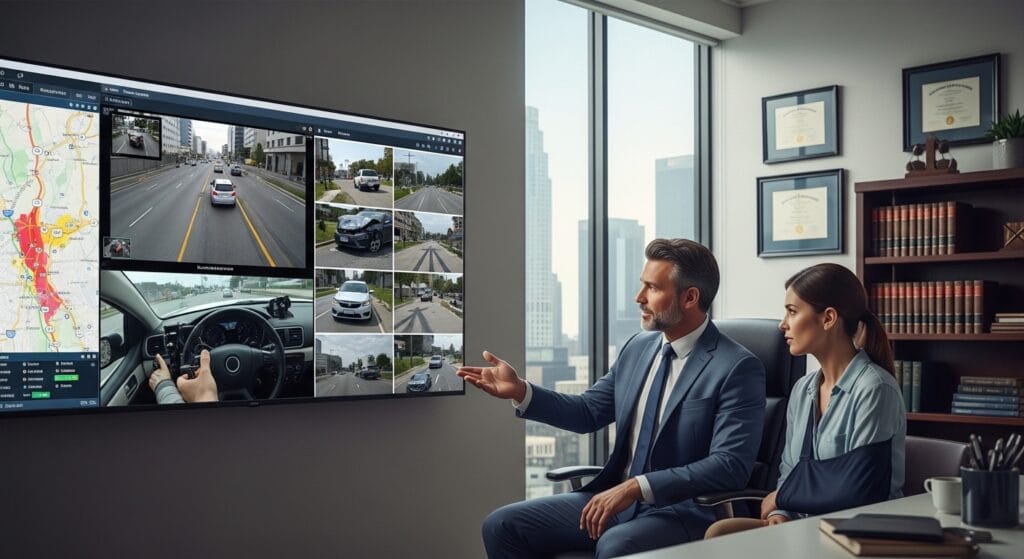
Compensation in these claims may include emergency care, ambulance transport, hospitalization, surgery, rehabilitation, lost income, future medical costs, vehicle loss, pain and suffering, and lasting disability. Roadside crashes can be especially violent because the injured person may be outside the car, partially outside the car, or caught in a secondary impact. What might have been a minor property-damage event in another setting can become a life-changing injury when someone is standing on the shoulder with almost no protection.
That is another reason this is a strong 2026 topic. The law update gives you a fresh hook, but the injuries are what make the article meaningful. Broken bones, spinal trauma, head injuries, and crushing injuries are all realistic outcomes in shoulder-side collisions. Readers need content that explains not just the rule, but why the rule matters in real life.
Common mistakes that can weaken a good claim
The biggest mistake is assuming the police report will tell the whole story. Often it will not. Another mistake is failing to photograph the warning setup before the vehicles are moved. Victims also damage good claims when they talk too freely to the insurer before understanding how the new law may support them. And many people do not realize how important scene evidence is in these cases. Skid marks, debris spread, gouge marks, app data, onboard telematics, and nearby business cameras can all matter.
The bottom line is simple. Los Angeles move over law accident claims are more important in 2026 because California made the roadside duty broader and clearer. That does not mean every roadside crash becomes an automatic win for the injured person. It does mean many victims now have a stronger way to explain why the approaching driver should have slowed, shifted over, or reacted differently. In a city as fast and distracted as Los Angeles, that is not a minor change. It is a legal angle worth understanding.
For official background, readers can review the California DMV’s 2026 new laws summary and the California driver handbook guidance on roadside emergency safety.