
Los Angeles robotaxi accident claims matter more in 2026 because autonomous ride-hailing is no longer just a future idea. It is already part of the traffic and legal landscape in Los Angeles. When a crash involves a self-driving vehicle, injured people still face medical bills, lost income, and insurance pressure. At the same time, they also face a different kind of evidence fight.
Many people oversimplify these cases. Some assume the company will accept blame right away because the vehicle uses advanced technology. Others assume the victim will never prove fault because the software is too complex. Neither view is accurate. These claims still rely on ordinary negligence rules, but they also raise new questions about app records, camera footage, fleet logs, remote support, and who controlled the vehicle at the time of impact.
That is why Los Angeles robotaxi accident claims need their own discussion. A passenger inside an autonomous vehicle may get hurt when another driver hits the car. A pedestrian may get struck by a driverless vehicle at an intersection. A human-driven car may collide with a robotaxi during a lane change, left turn, or rear-end crash. Each of those cases may involve familiar accident-law issues, but the proof often looks very different.
This topic also fits the content already on your site. Readers who want more background can continue to AI and Autonomous Vehicle Accidents: How Liability Works for Los Angeles Drivers in 2025, AI Dashcams and Digital Evidence: How Technology Is Changing Car Accident Claims in Los Angeles, Uber and Lyft Accidents in Los Angeles: How California’s 2026 Rideshare Insurance Rules Can Change Your Injury Claim, and Understanding Uninsured Motorist Coverage in California: Protecting Yourself on LA Roads.
Why Los Angeles Robotaxi Accident Claims Matter More in 2026
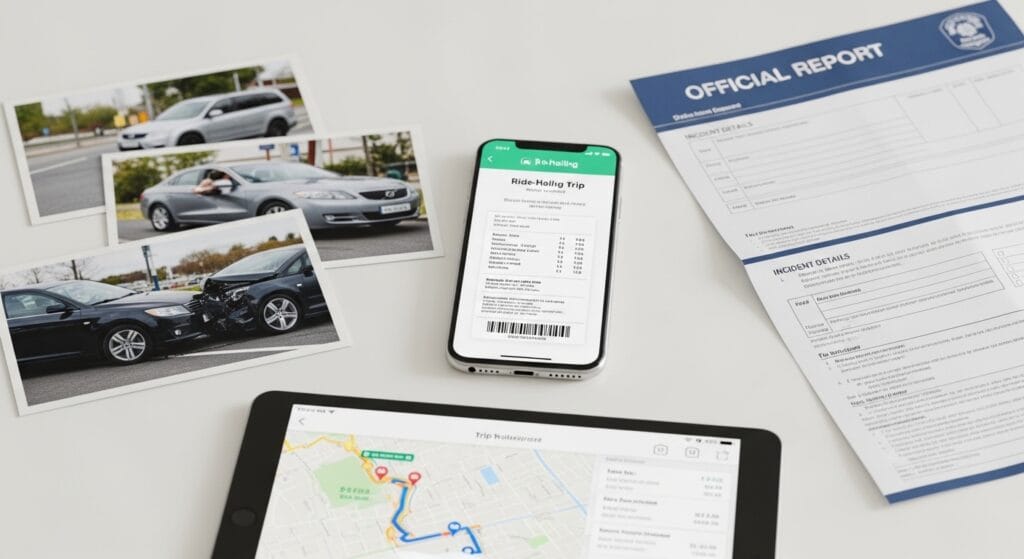
Los Angeles robotaxi accident claims matter more now because the roads are changing fast. Los Angeles already deals with heavy traffic, distracted driving, hard merges, and rideshare congestion. Autonomous ride-hailing adds another layer to that mess. After a crash, the main issue is no longer just what a human driver saw. The case may also turn on what the vehicle’s sensors detected, whether the system was engaged, and what the company saved after the collision.
Robotaxi crashes create new evidence problems
A traditional crash case usually starts with witness statements, a police report, vehicle damage, medical records, and maybe dashcam footage. A robotaxi case may include all of that, but it often adds route data, trip logs, app timestamps, onboard camera video, and backend records from the platform. That does not mean every case becomes a product liability lawsuit. It does mean the facts can get technical very quickly.
App and trip records can shape the whole claim
If the injured person was a passenger, the ride itself may produce critical evidence. The app may show the pickup point, drop-off point, trip time, route, and customer-support messages. A receipt may confirm the exact ride. Phone screenshots can also help lock in details before they disappear. In serious Los Angeles robotaxi accident claims, that kind of data may matter as much as the police report.
Company-controlled data can become a problem fast
Victims do not control most of the digital evidence in these cases. The platform, fleet operator, or other third party often controls the strongest records. That makes timing important. If the injured person waits too long, key data may become harder to preserve, harder to identify, or harder to demand. Early evidence preservation is not a side issue in a robotaxi case. It is one of the main issues.
Public confidence does not decide legal responsibility
Some people trust autonomous systems more than human drivers. Others do not trust them at all. Neither reaction decides fault after a crash. Courts and insurers still focus on negligence, causation, comparative fault, and damages. The fact that a vehicle was operating autonomously does not prove fault by itself. It also does not protect the operator from scrutiny.
A robotaxi company may still face hard questions about system behavior, fleet oversight, passenger safety, maintenance, remote assistance, and crash response. On the other side, another human driver may still have caused the collision. In many cases, both sides point fingers early. That is why a lawyer should not let the label “self-driving” replace a real investigation.
How Fault and Compensation Work in Los Angeles Robotaxi Accident Claims
Most Los Angeles robotaxi accident claims still turn on familiar negligence rules. The difference is that the pool of possible defendants is often wider. Another human driver may have caused the crash. The robotaxi operator may have played a role. A fleet maintenance issue may matter. A remote support system may also come into the picture. In some cases, poor road design, bad signage, or lane confusion may add another layer.
Because of that, these claims should not get boxed into a simple story too early. One side may argue that the human driver caused everything. Another side may argue that the robotaxi made an unsafe stop or unsafe movement. A pedestrian case may focus on whether the vehicle failed to react to a visible person in the roadway. Strong claims depend on facts, not assumptions.
Who may be legally responsible after a robotaxi crash
Responsibility depends on what actually happened. A human driver may rear-end an autonomous vehicle. A robotaxi may stop in a confusing place and trigger a multi-vehicle crash. A fleet operator may face claims about maintenance, deployment choices, or evidence preservation. A communication issue may matter if the vehicle encountered an emergency or an unusual road condition.
This is why your existing autonomous-vehicle and rideshare-insurance articles make useful internal links. Readers who land on this post usually want to know two things right away. First, who can be sued? Second, what coverage may actually pay the claim? Those questions often work better as part of a content cluster than in a single article.
What evidence victims should preserve right away
Victims should save app screenshots, ride receipts, police report numbers, scene photos, visible vehicle branding, medical records, and witness contact information. They should also keep any emails, texts, or customer-support messages from the ride platform. If possible, they should note whether the vehicle appeared fully driverless or had a person inside. If another car was involved, they should gather the same details they would collect after any ordinary crash, including insurance information, plate numbers, and photos of the damage.
What damages and insurance issues usually follow
Los Angeles injury victim reviewing robotaxi crash evidence with an attorneyLos Angeles injury victim reviewing robotaxi crash evidence with an attorneyLos Angeles injury victim reviewing robotaxi crash evidence with an attorneyLos Angeles injury victim reviewing robotaxi crash evidence with an attorneyLos Angeles injury victim reviewing robotaxi crash evidence with an attorneyLos Angeles injury victim reviewing robotaxi crash evidence with an attorneyLos Angeles injury victim reviewing robotaxi crash evidence with an attorney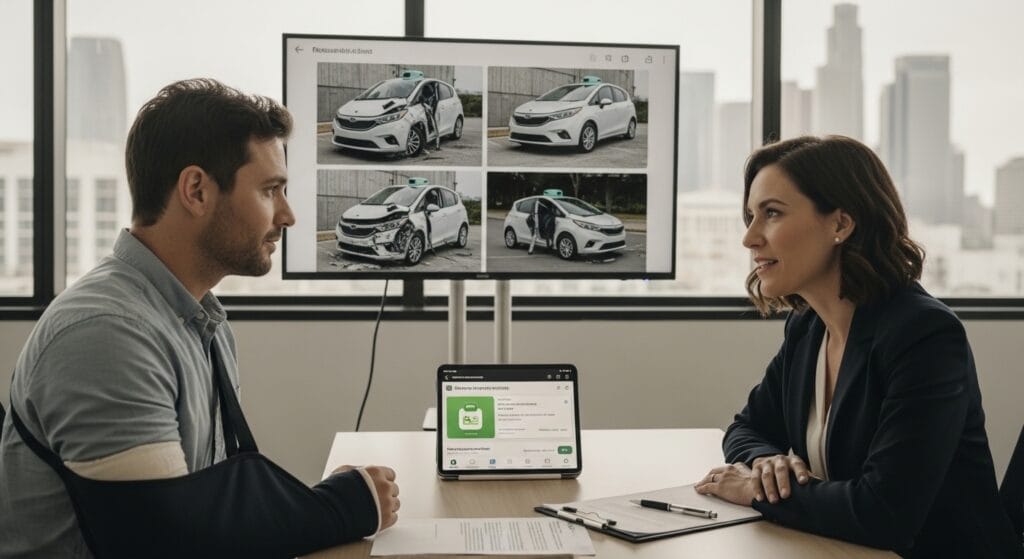 Los Angeles injury victim reviewing robotaxi crash evidence with an attorneyLos Angeles injury victim reviewing robotaxi crash evidence with an attorney
Compensation may include emergency treatment, ambulance charges, hospitalization, surgery, follow-up care, medication, therapy, lost wages, reduced earning capacity, property damage, and pain and suffering. Severe cases may also involve chronic pain, mobility limits, cognitive symptoms, or anxiety related to travel. Those damages need careful documentation, especially when the defense plans to fight with technical records and a polished safety narrative.
Insurance can also get complicated fast. If another human driver caused the crash, that driver’s policy may be the first source of recovery. If the autonomous service contributed to the collision, the operator’s coverage may become central. If the at-fault driver has too little insurance, uninsured or underinsured motorist coverage may also matter. That is why your uninsured motorist article works well as a next-step internal link for readers dealing with limited coverage.
Why early legal framing matters in these cases
A robotaxi claim needs structure from the start. The victim needs the usual crash evidence, but they also need a plan for digital proof, app records, and control issues. Who operated the vehicle? What system was active? What records exist? Who holds them? Those questions should come early, not months later. The longer a victim waits, the easier it becomes for key records to slip out of focus.
The practical takeaway is simple. Los Angeles robotaxi accident claims are not impossible to understand, but they do require a more disciplined approach than a standard car crash. Victims should treat them as serious evidence-preservation cases from day one. That approach gives them a better chance to prove fault, protect claim value, and avoid getting buried under the defense’s technical story.
For general background on California’s autonomous vehicle framework, readers can review the California DMV Autonomous Vehicles page and the CPUC Autonomous Vehicle Programs page.