
A Los Angeles drowsy driving accident claim can be harder to prove than a crash caused by speeding, drunk driving, or texting. A tired driver may not leave clear evidence at the scene. There may be no empty bottle, no phone record, and no obvious traffic violation. Still, fatigue can be just as dangerous.
Drowsy drivers can drift out of a lane, miss a red light, fail to brake, enter traffic the wrong way, or crash without reacting. Some fall asleep for only a few seconds. That short lapse can send a vehicle across lanes, into another car, onto a sidewalk, or into a pedestrian area.
This issue matters in Los Angeles because many drivers deal with long commutes, late shifts, gig work, delivery pressure, nightlife traffic, medical appointments, and freeway congestion. A driver may think they can “push through” fatigue. That choice can cause a serious crash.
For injured victims, the key question is direct. Did fatigue, sleepiness, a medical condition, medication, or an unsafe work schedule help cause the collision? If the answer is yes, the injured person may have a claim for medical bills, lost income, pain and suffering, future care, and other damages.
Why Drowsy Driving Accident Claims Are Getting More Attention
Drowsy driving is not a small safety problem. The National Highway Traffic Safety Administration warns that drowsy driving kills but is preventable. NHTSA also reported 644 deaths from drowsy-driving-related crashes in 2024. Readers can review the official safety source here: NHTSA drowsy driving guidance.
NHTSA also explains that exact numbers are difficult to measure. Crash investigators may look for clues that sleepiness played a role, but those clues are not always clear. That matters in a legal claim because fatigue cases often need strong supporting evidence.
A tired driver may deny being sleepy. They may say another car cut them off. They may blame road conditions, glare, traffic, or the injured person. Insurance companies may also argue that fatigue is only speculation unless the victim can point to facts.
A strong Los Angeles drowsy driving accident claim should focus on the full timeline. Where was the driver coming from? How long had they been awake? Were they working a long shift? Did they take medication? Did they have a known sleep disorder? Did witnesses see drifting, delayed braking, or no reaction before impact?
Fatigue can look like distraction or impairment
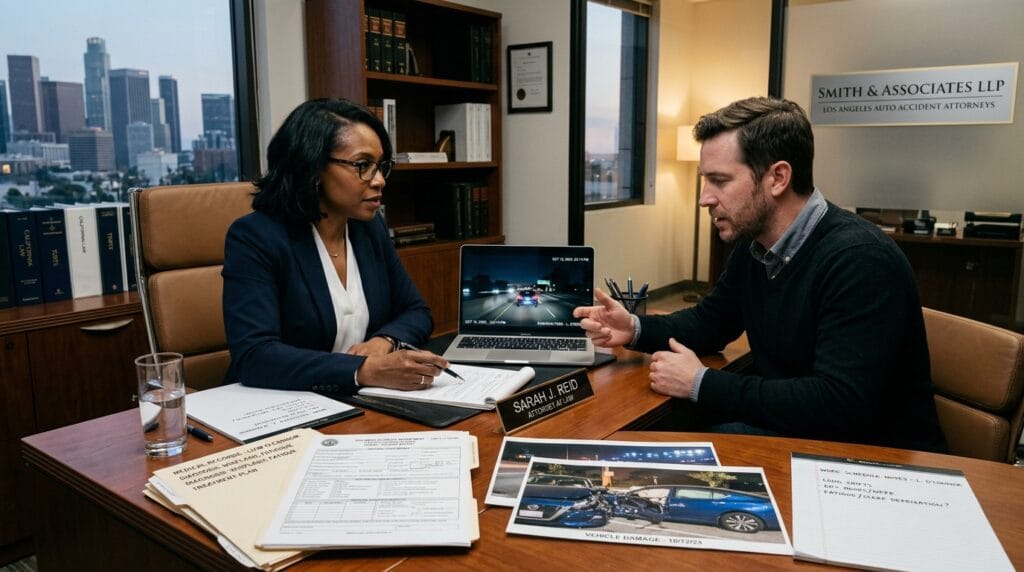
Fatigue can create symptoms that look similar to distraction or impairment. A sleepy driver may drift between lanes. They may stare ahead without reacting. They may brake late or not brake at all. They may miss traffic signals, exits, or stopped cars.
That overlap can make fault disputes more complex. An adjuster may say the driver was distracted. Another party may claim the driver had a medical emergency. A witness may say the driver looked drunk. The evidence must sort out what happened.
Your site already has a useful article on Los Angeles distracted driving accident claims. That internal link fits well because both distracted driving and drowsy driving cases often depend on behavior before impact, digital records, and witness statements.
Warning signs may appear before the crash
Drowsy driving often shows warning signs before impact. A vehicle may weave, drift, slow down, speed up, or cross lane markings. The driver may miss a green light. They may fail to brake before hitting traffic. They may also leave the road with little or no evasive movement.
The California Office of Traffic Safety lists several signs of driver fatigue. These include frequent yawning, wandering thoughts, trouble remembering recent miles, missing an exit, drifting from a lane, or hitting a rumble strip. Readers can review the state safety page here: California OTS drowsy driving guidance.
Witnesses may help prove these signs. A driver behind the vehicle may have seen drifting. A passenger may have noticed yawning or nodding off. A dashcam may show the vehicle crossing lane lines before the crash.
Los Angeles work schedules can become part of the evidence
Los Angeles has many drivers who work long or irregular hours. Nurses, warehouse workers, security guards, delivery drivers, rideshare drivers, restaurant staff, truck drivers, and airport workers may drive when fatigue risk is high. A long shift does not excuse unsafe driving.
Work records may matter after a serious crash. Timecards, dispatch logs, rideshare app data, delivery records, shift schedules, and employer messages may show whether the driver was exhausted. In some cases, a company may share responsibility if it pushed unsafe hours or ignored fatigue risks.
This can connect to commercial driving issues. If the tired driver operated a company vehicle, truck, van, or delivery car, the claim may need a deeper investigation into employer policies and supervision.
Medical conditions and medications can complicate the claim
Not every fatigue-related crash comes from simple lack of sleep. Some cases involve sleep apnea, seizures, fainting, diabetes, medication side effects, or other health issues. These facts can make the legal analysis more complicated.
A driver may argue that a sudden medical event caused the crash. That defense does not automatically defeat the claim. The key question is whether the driver knew or should have known about the risk. A person with repeated symptoms, prior warnings, medication restrictions, or untreated sleep problems may still face liability.
Prescription and over-the-counter medications can also matter. Some medications warn against driving or operating machinery. If a driver ignored those warnings and caused a crash, that fact may support negligence.
Medical defenses should not end the investigation
Insurance companies may use a medical explanation to reduce responsibility. They may say the driver could not control what happened. Victims should not accept that explanation without review.
The investigation should ask several questions. Did the driver have prior episodes? Did doctors warn against driving? Did the driver skip treatment? Did medication labels warn about drowsiness? Did the driver continue driving after feeling sleepy, dizzy, or unwell?
Medical privacy rules can make these issues harder to investigate. Still, a serious injury claim may justify legal requests for relevant records. The goal is not to invade privacy. The goal is to learn whether the crash was truly sudden or reasonably preventable.
How to Prove a Los Angeles Drowsy Driving Accident Claim
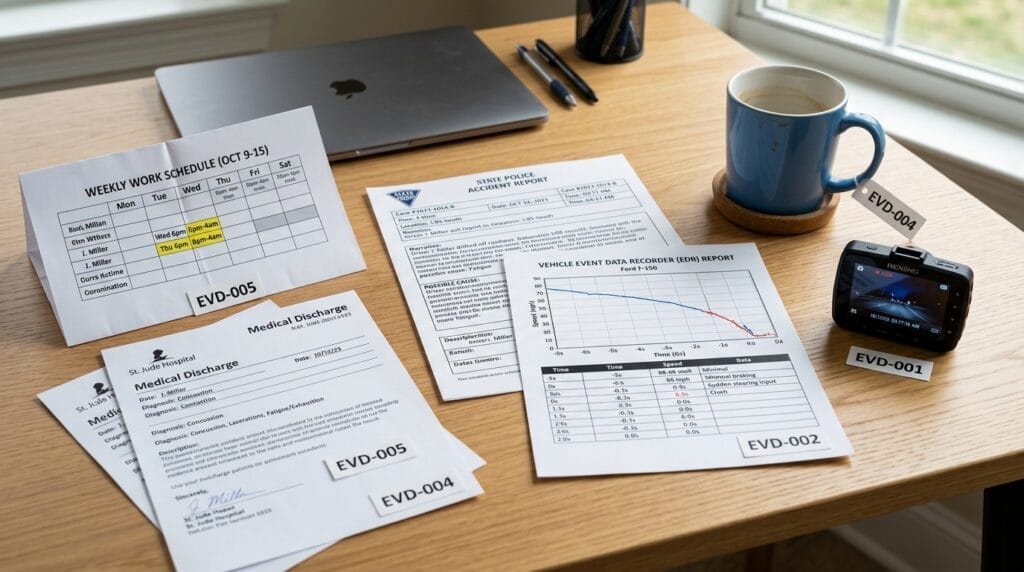
Evidence matters in every car accident case. It matters even more in a drowsy driving claim. Fatigue can disappear after the crash. A driver may become alert because of adrenaline. They may deny being tired. They may also change their story after speaking with an insurer.
Victims should act quickly. Call police, get medical care, take photos, gather witness names, and preserve video. Ask nearby businesses, homes, buses, rideshare vehicles, and delivery vehicles whether cameras captured the crash. Many systems delete footage after a short period.
Police reports can also help. An officer may note lack of skid marks, no braking, lane drifting, driver statements, witness comments, or signs of sleepiness. A report may not include everything, but it can support the claim.
Digital evidence can show what happened before impact
Digital evidence may include dashcam footage, traffic cameras, vehicle event data, GPS records, app logs, phone data, rideshare records, delivery records, and connected-car information. These records can show speed, lane position, braking, steering, route history, and driver activity.
Your site already covers this topic in Los Angeles Vision Zero accident claims. That article discusses street-safety data, speed, visibility, and digital proof. It also connects well with fatigue crashes because dangerous corridors can make delayed reaction time even more harmful.
Hit-and-run evidence may also overlap with fatigue cases. A tired driver may panic and flee after impact. Your related article on Los Angeles hit-and-run accident claims can support readers who face that situation.
Speed evidence may matter too. A sleepy driver traveling too fast has less time to recover after drifting or missing traffic ahead. Your guide on Los Angeles speeding accident claims is a useful internal link here.
Insurance companies may call fatigue “speculation”
Insurers often attack drowsy driving claims by calling fatigue speculative. They may argue there is no test for sleepiness like there is for alcohol. They may also say the victim cannot prove the driver fell asleep.
The response is evidence. A case does not always need a confession. Lane drifting, no braking, witness reports, work schedules, app records, medication warnings, crash timing, and vehicle data can support the argument. Several small facts can build a strong timeline.
Victims should avoid guessing in recorded statements. Do not say the driver “must have fallen asleep” unless evidence supports it. Describe what you saw. Explain the movement, impact, and injuries. Let the evidence show the cause.
Do not settle before future damages are clear
A drowsy driving crash can cause serious injuries. Victims may suffer head injuries, neck pain, back pain, fractures, shoulder injuries, knee trauma, internal injuries, anxiety, or long-term disability. Some injuries take time to understand.
A quick settlement may not include future care. It may also ignore missed work, reduced earning ability, pain and suffering, therapy, transportation costs, and long-term limitations. Once a release is signed, the claim usually ends.
Before settling, review the full damage picture. Medical bills, imaging, specialist visits, therapy, medication, lost income, and future treatment all matter. If the crash caused permanent injury or death, the case needs deeper review.
A Los Angeles drowsy driving accident claim should not depend on the insurance company’s first version of the crash. Fatigue can be hidden, but it is not impossible to prove. Strong claims use timelines, witness details, medical records, digital evidence, work records, and crash data.
If you were injured by a tired or asleep-at-the-wheel driver in Los Angeles, protect the evidence early. Get medical care, report the crash, document the scene, avoid rushed statements, and review every possible source of liability. For more legal guidance, visit the Los Angeles Automobile Accident Attorney services page or explore the Los Angeles auto accident blog.